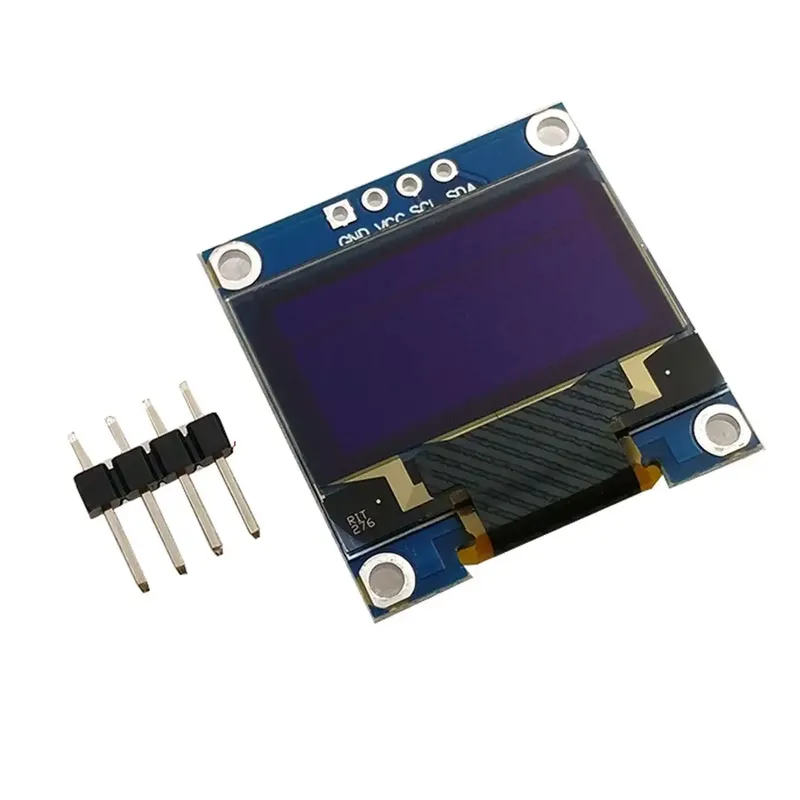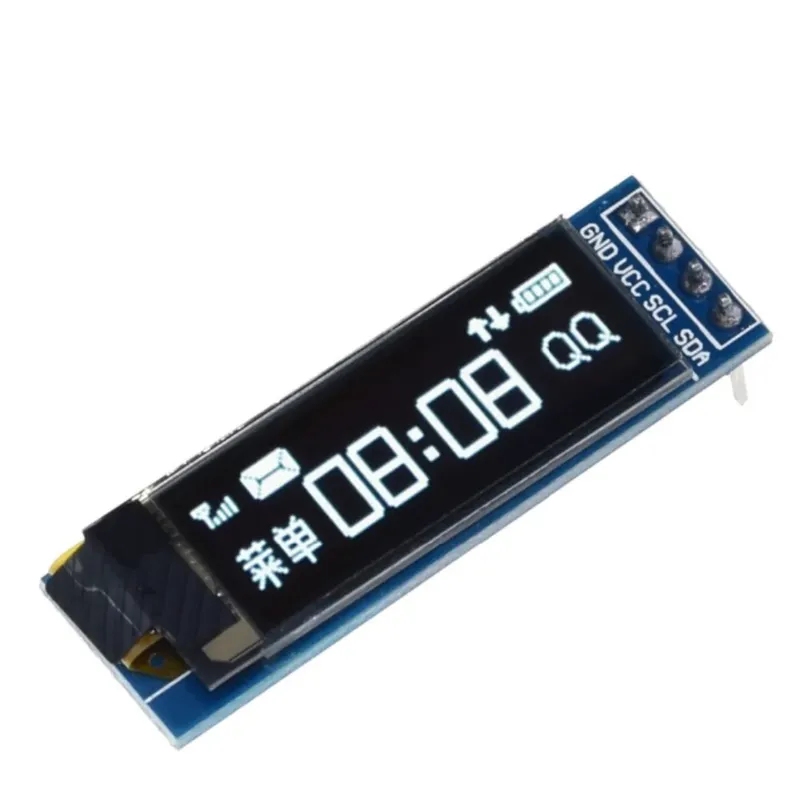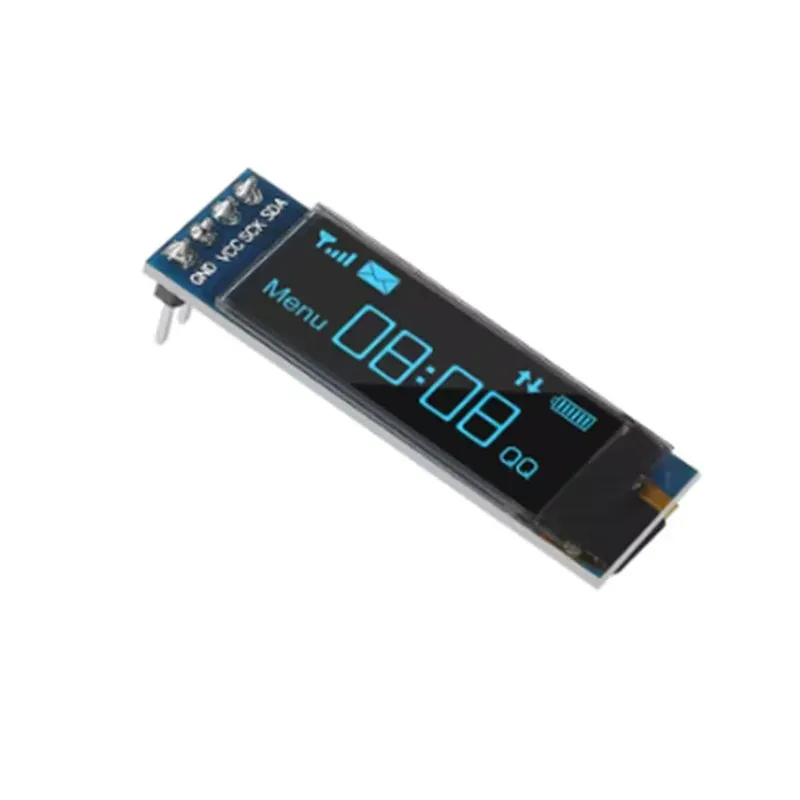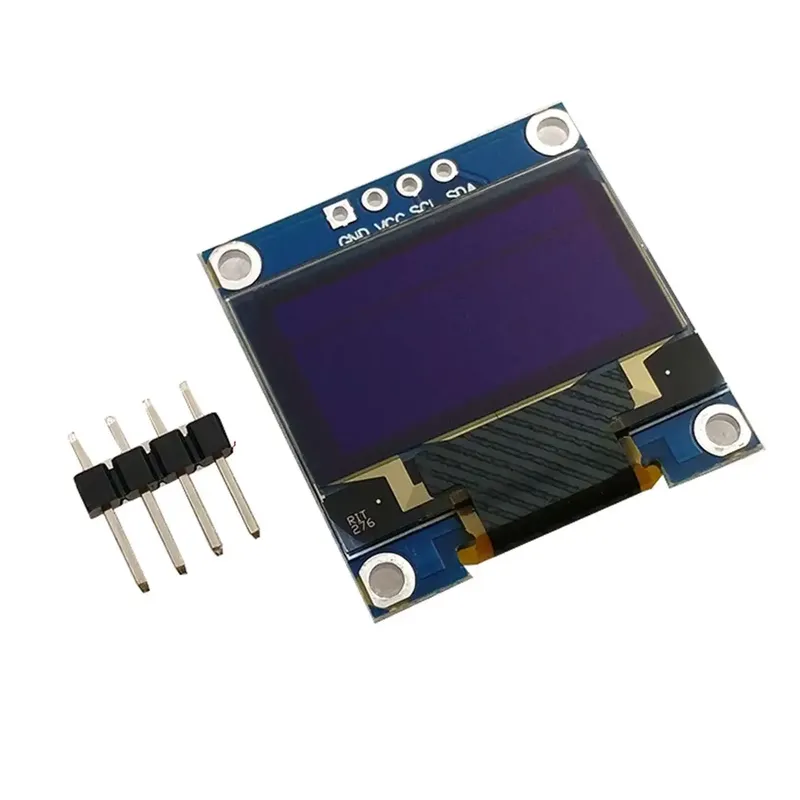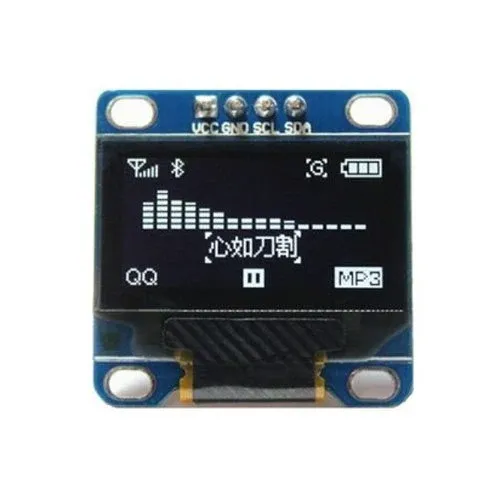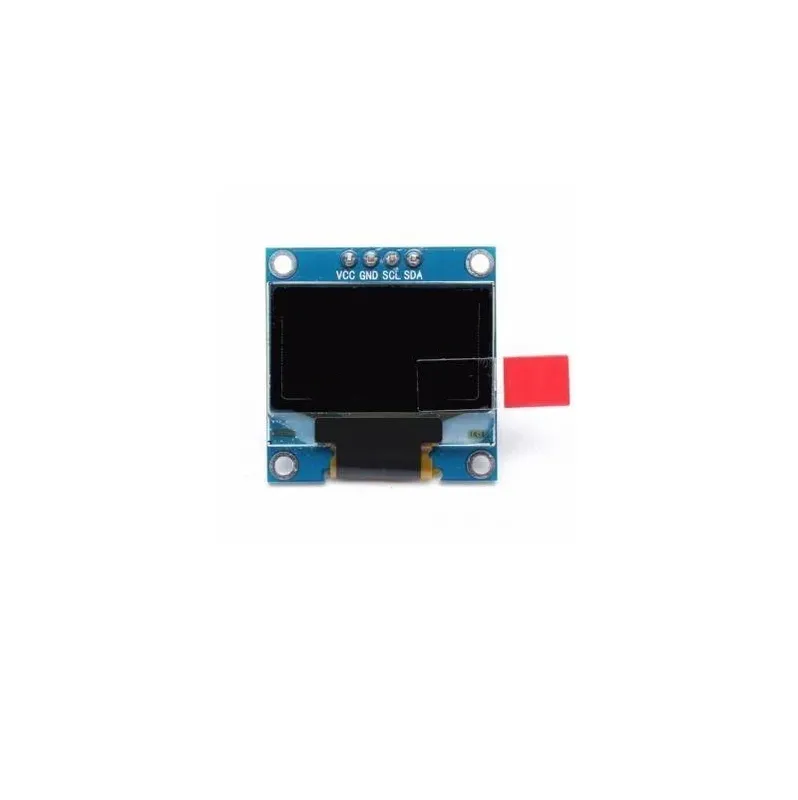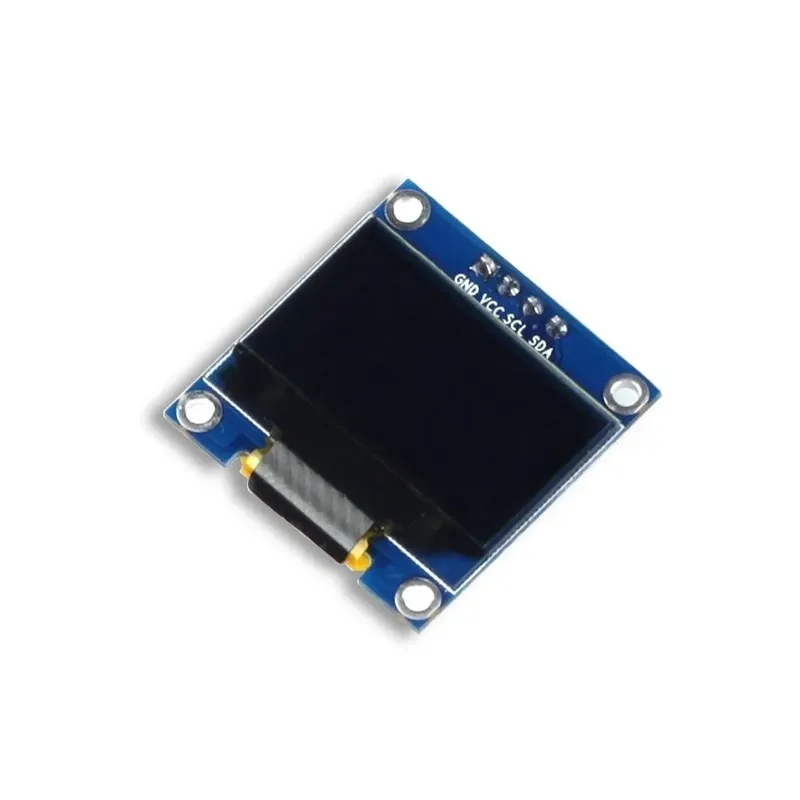
0.96-inch Yellow-Blue OLED Display 128x64 I2C (SSD1306)
Prices updated: 13 Oct 2026
Compare prices
| Store | product | Price | View in store |
|---|---|---|---|
 Makers ElectronicsCheapest Makers ElectronicsCheapest | OLED Display I2C 4 Pin 0.96″- Yellow & Blue Characters | 160 EGP | View in store |
 Ekostra Ekostra | 0.96 inch OLED Display Module 128×64 I2C Yellow Blue | 160 EGP | View in store |
 UGE UGE | Yellow Blue Color Graphic 0.96 | 296 EGP | View in store |
Price history
Lowest daily price, last 90 days
Lowest price recorded: 160 EGP
About this product
A 0.96-inch monochrome OLED module with a 128x64 dot matrix and a yellow-blue dual-color panel. It uses the SSD1306 driver and communicates over I2C, making it suitable for showing sensor readings, menus and simple graphics on Arduino, ESP32 and other microcontroller boards. Its self-emissive pixels give high contrast and a wide viewing angle.
Specifications
- Size
- 0.96 inch
- Resolution
- 128 x 64 pixels
- Display type
- Monochrome OLED, yellow/blue
- Driver IC
- SSD1306
- Interface
- I2C (IIC)
- Voltage
- 3 V to 5 V DC
Frequently asked questions
What is the price of 0.96-inch Yellow-Blue OLED Display 128x64 I2C (SSD1306) in Egypt?
0.96-inch Yellow-Blue OLED Display 128x64 I2C (SSD1306) currently costs between 160 and 296 EGP across 3 offers in Egypt.
Where can I buy 0.96-inch Yellow-Blue OLED Display 128x64 I2C (SSD1306) in Egypt?
0.96-inch Yellow-Blue OLED Display 128x64 I2C (SSD1306) is available from Makers Electronics, Ekostra, and UGE. Compare the offers above to find the best price.
Can I use this OLED with a 3.3 V ESP32 or a 5 V Arduino?
Yes. The listed operating range is 3 V to 5 V DC, so the module works with both 3.3 V and 5 V microcontroller boards. Connect VCC to the board's 3.3 V or 5 V pin and GND to GND.
What is the I2C address and how do I wire SDA and SCL?
Most SSD1306 0.96-inch modules use address 0x3C, and some use 0x3D. Connect SDA and SCL to the board's I2C pins, for example A4 and A5 on classic Arduino Uno, or GPIO21 and GPIO22 on many ESP32 boards. Use an I2C scanner to confirm the address.