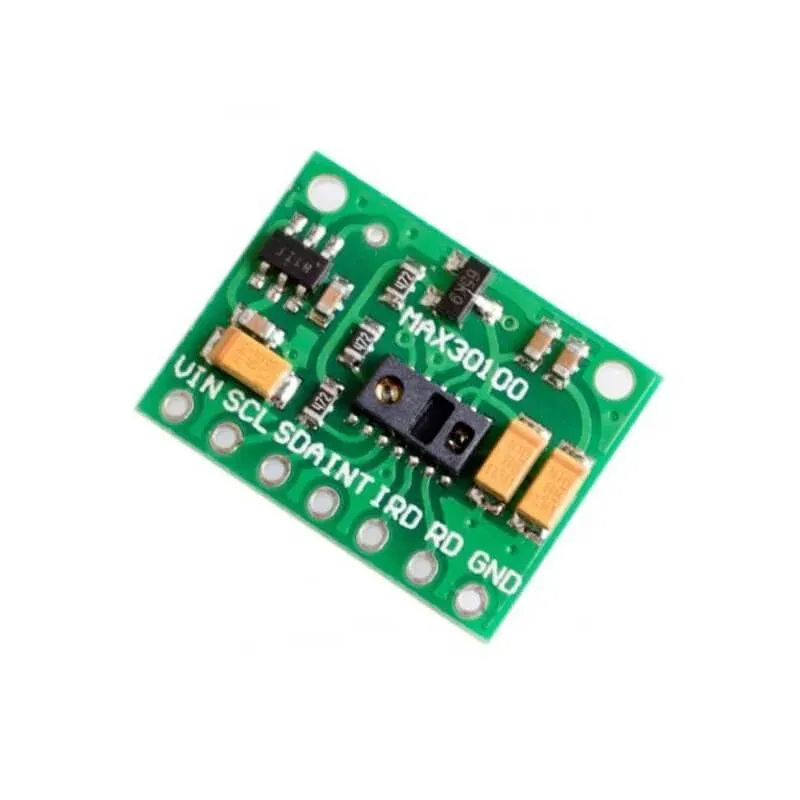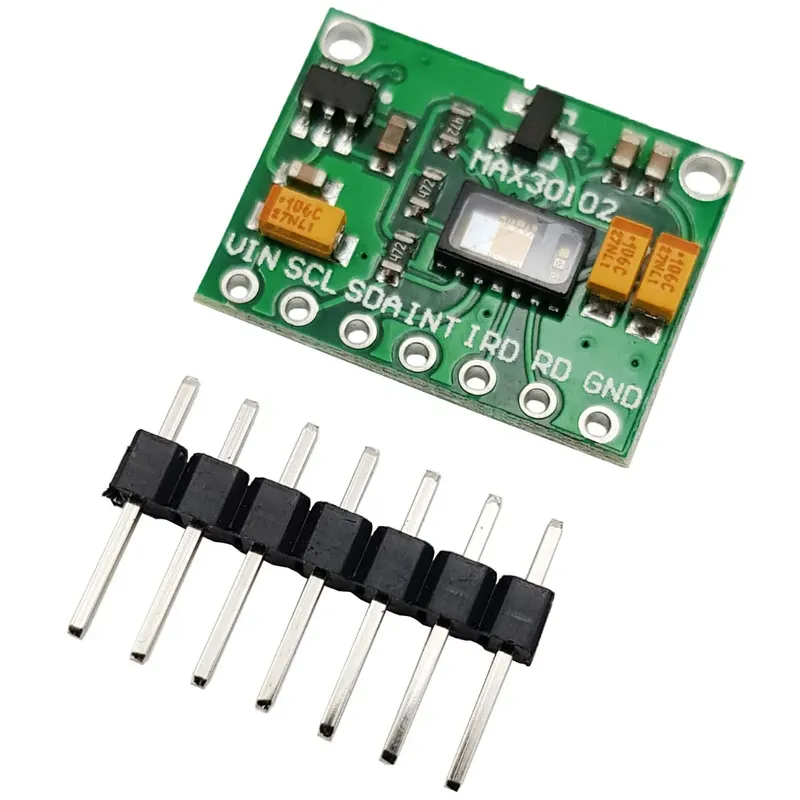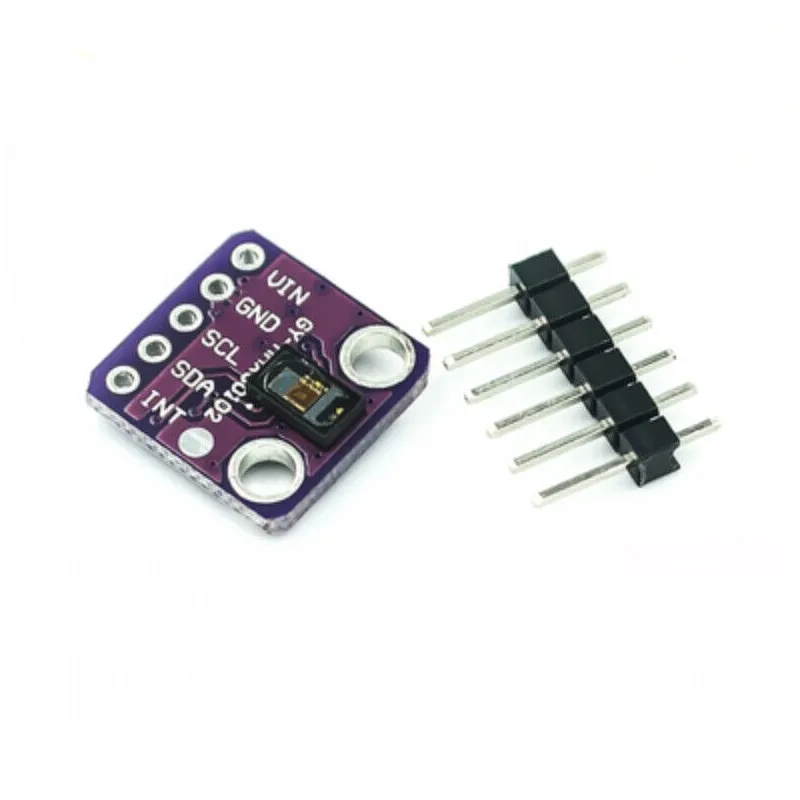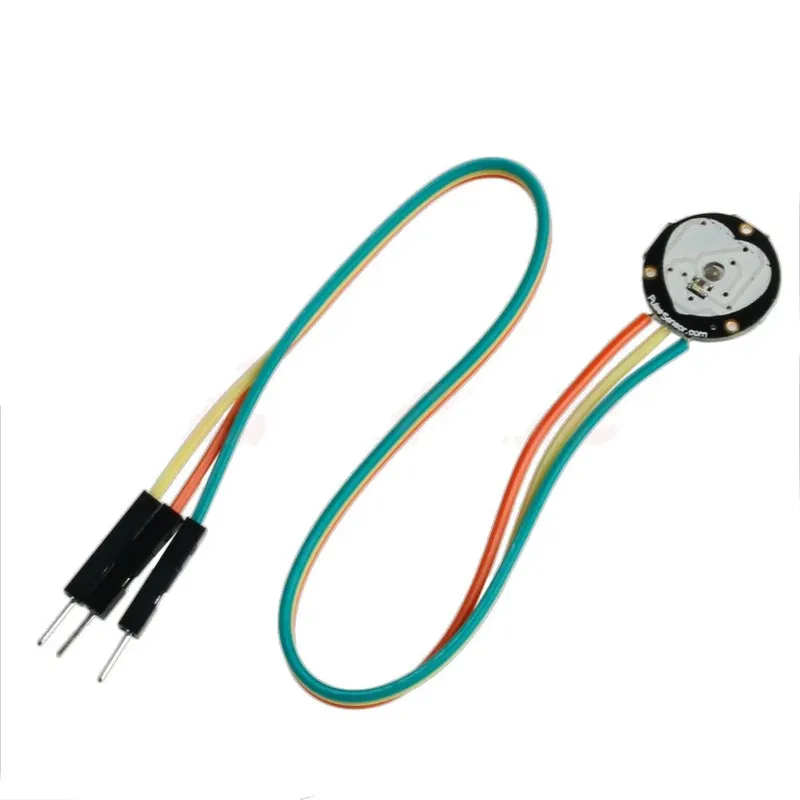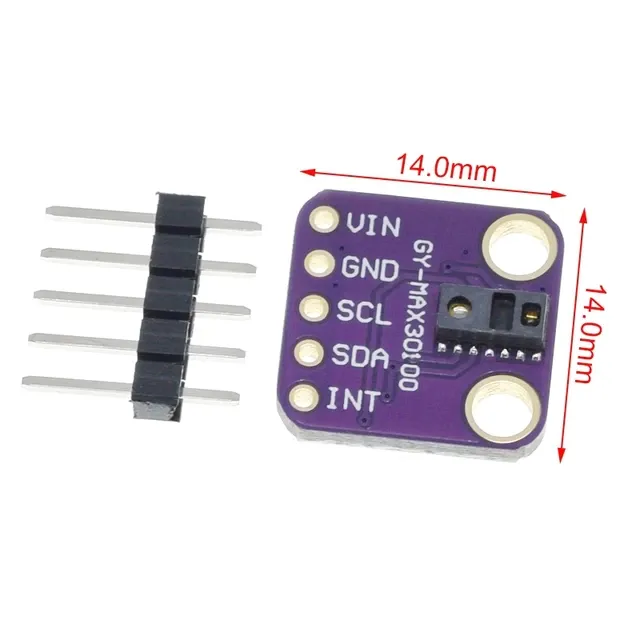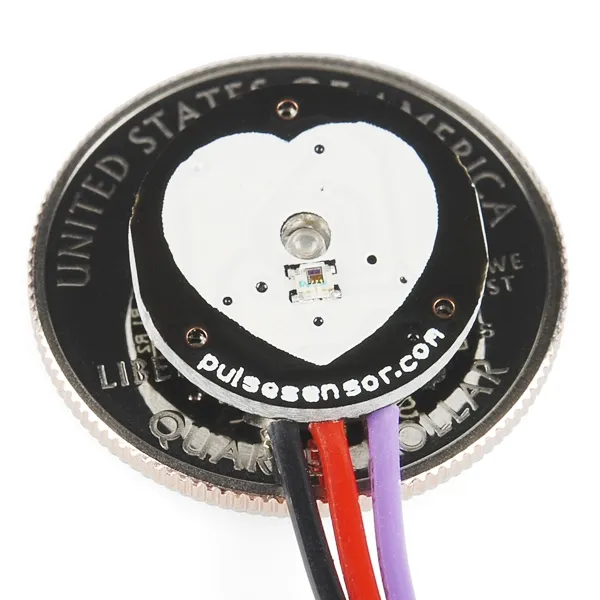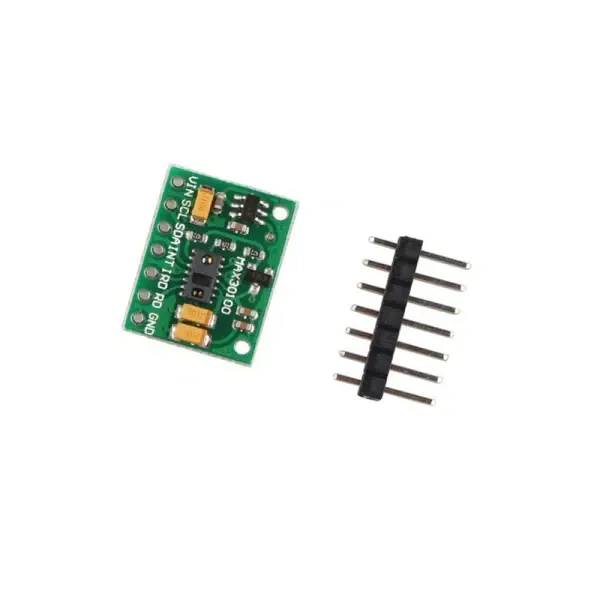
MAX30100 Pulse Oximeter & Heart Rate Sensor Module (I²C)
Prices updated: 12 Oct 2026
Compare prices
| Store | product | Price | View in store |
|---|---|---|---|
| Most ElectronicsCheapest | MAX30100 Pulse Oximeter and Heart Rate Sensor (Green Version) | 91.9 EGP113 | View in store |
| Ekostra | MH-ET LIVE MAX30100 Heart Rate Oximetry Sensor Module Heart Rate Sensor Breakout Ultra-Low Power | 190 EGP | View in store |
Price history
Lowest daily price, last 90 days
Not enough price history yet.
Lowest price recorded: 91.9 EGP
About this product
The MAX30100 module is a breakout board for Maxim's integrated pulse oximetry and heart-rate sensor. It uses red (660 nm) and infrared (880 nm) LEDs with a photodetector to measure blood absorbance through a fingertip, and communicates over I²C. It suits Arduino projects, health-monitoring prototypes and educational pulse oximetry experiments.
Specifications
- Chip
- MAX30100
- LED wavelengths
- Red 660 nm, IR 880 nm
- Interface
- I²C
- I²C address
- 0x57
- Sensor type
- Heart rate & SpO₂ (pulse oximetry)
- Mount type
- Breakout module
- LED type
- Red & IR LEDs
Frequently asked questions
What is the price of MAX30100 Pulse Oximeter & Heart Rate Sensor Module (I²C) in Egypt?
MAX30100 Pulse Oximeter & Heart Rate Sensor Module (I²C) currently costs between 91.9 and 190 EGP across 2 offers in Egypt.
Where can I buy MAX30100 Pulse Oximeter & Heart Rate Sensor Module (I²C) in Egypt?
MAX30100 Pulse Oximeter & Heart Rate Sensor Module (I²C) is available from Most Electronics and Ekostra. Compare the offers above to find the best price.
How do I connect the MAX30100 module to an Arduino?
Connect VCC and GND to power (use the voltage marked on your breakout board), and connect SDA and SCL to the Arduino's I²C pins (A4 and A5 on an Uno). Then install a MAX30100 Arduino library, which handles the sensor's registers and heart-rate calculation.
Where should the finger be placed for a reading?
Place the fingertip gently over the sensor window and keep it still during measurement. The module is designed for fingertip readings, and its output is intended for experiments and learning, not for medical diagnosis.