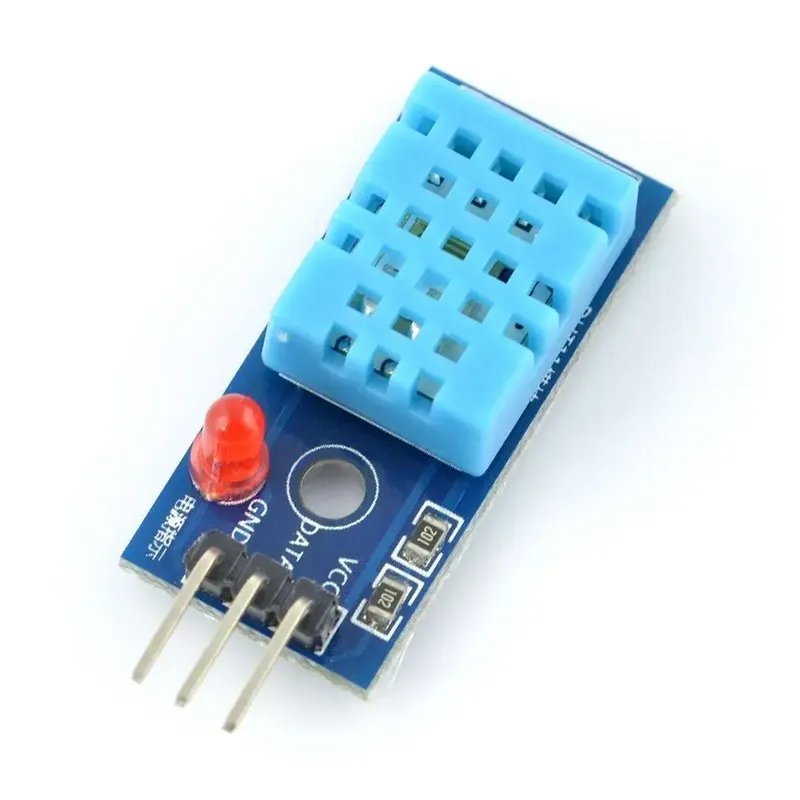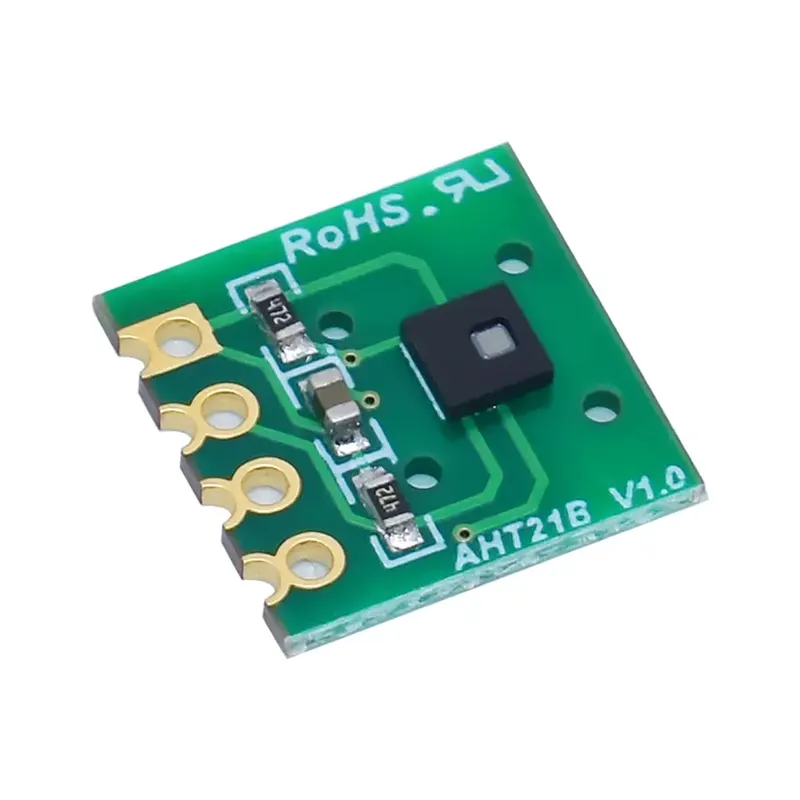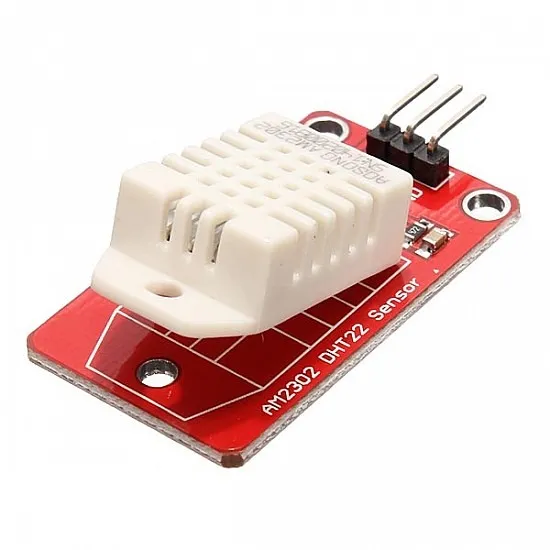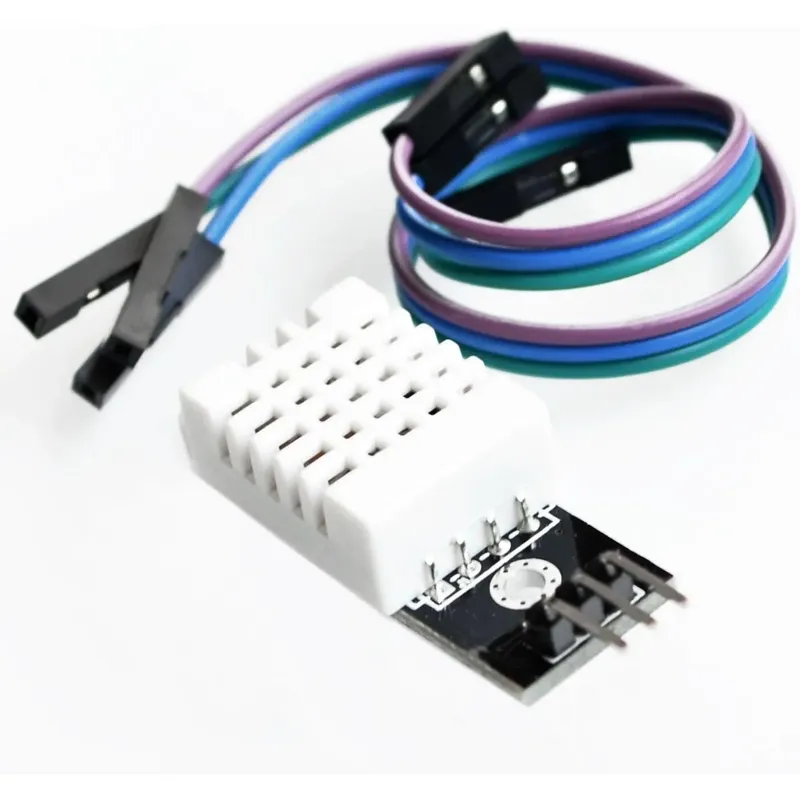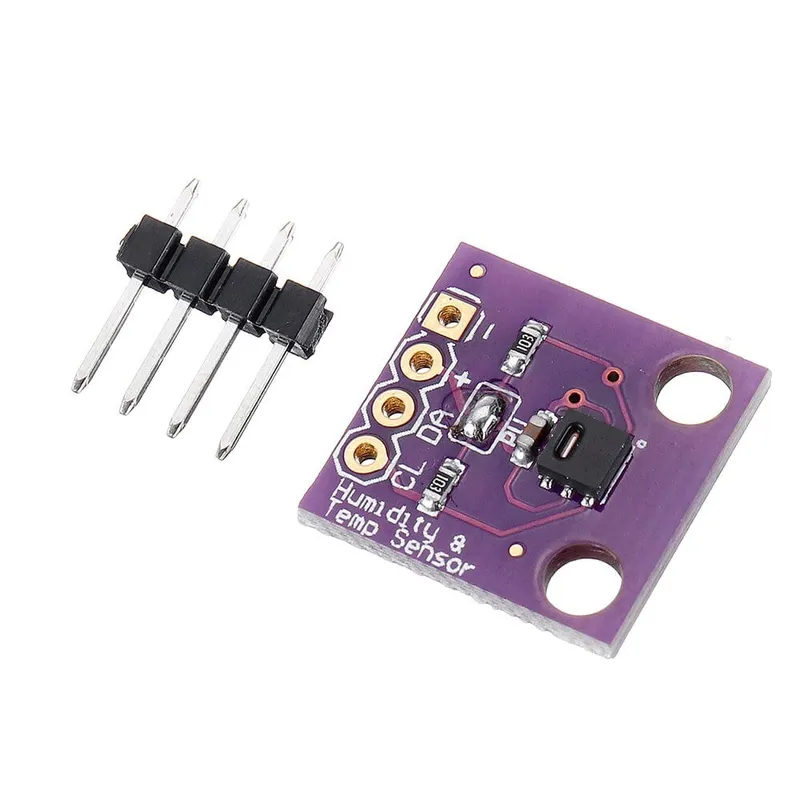
GY-213V HDC1080 Digital Humidity & Temperature Sensor Module (I2C)
Prices updated: 13 Oct 2026
Compare prices
| Store | product | Price | View in store |
|---|---|---|---|
 Ekostra Ekostra | GY-213V HDC1080 Digital Humidity | 195 EGP | View in store |
Price history
Lowest daily price, last 90 days
Not enough price history yet.
Lowest price recorded: 195 EGP
About this product
A GY-213V breakout board carrying the HDC1080 digital humidity and temperature sensor, read over I2C through a 4-pin header. It measures relative humidity and temperature at 14-bit resolution with built-in temperature compensation. It is used in weather stations, indoor climate monitoring and battery-powered IoT projects.
Specifications
- Part number
- GY-213V
- Sensor chip
- HDC1080
- Interface
- I2C
- I2C address
- 0x40 (default)
- Resolution
- 14-bit
- Connector
- 4-pin header (GND, VCC, SDA, SCL)
- Humidity range (chip)
- 0–100 % RH
- Temperature range (chip)
- -40 to 125 °C
Frequently asked questions
What is the price of GY-213V HDC1080 Digital Humidity & Temperature Sensor Module (I2C) in Egypt?
GY-213V HDC1080 Digital Humidity & Temperature Sensor Module (I2C) currently costs 195 EGP in Egypt.
Where can I buy GY-213V HDC1080 Digital Humidity & Temperature Sensor Module (I2C) in Egypt?
GY-213V HDC1080 Digital Humidity & Temperature Sensor Module (I2C) is available from Ekostra. Compare the offers above to find the best price.
How do I wire it to an Arduino or ESP32?
Connect GND to GND, SDA to SDA and SCL to SCL, and power VCC from 3.3 V or 5 V depending on your board and the module's regulator. On an Arduino Uno, SDA is A4 and SCL is A5. On most ESP32 boards the default I2C pins are GPIO21 (SDA) and GPIO22 (SCL), and you should use 3.3 V VCC since the ESP32 is a 3.3 V device.
Can it share an I2C bus with other sensors?
Yes, but its address is fixed at 0x40, so avoid other devices on the same bus with that address, such as the PCA9685 servo driver whose default is 0x40. If your breakout has no pull-up resistors on SDA and SCL, add about 4.7 kΩ pull-ups.