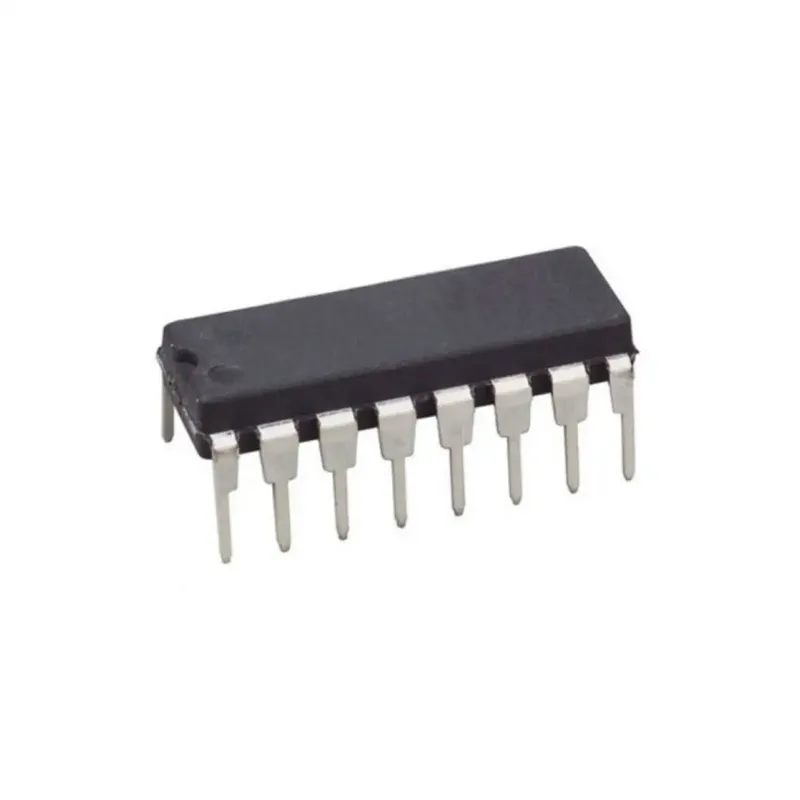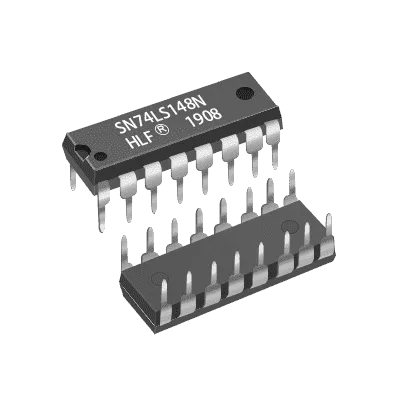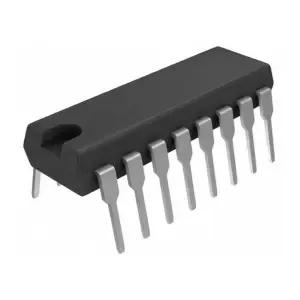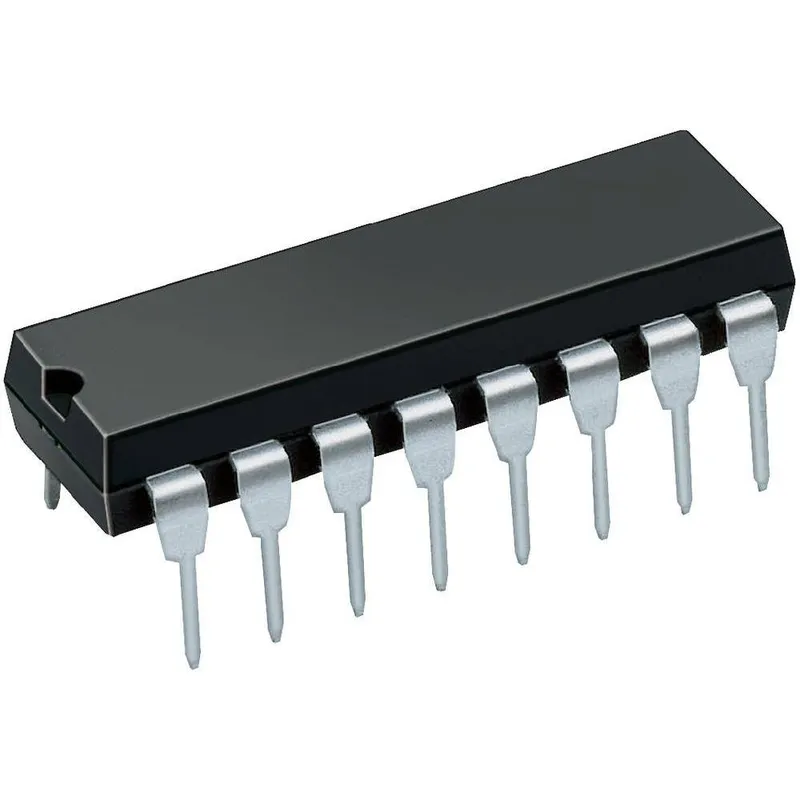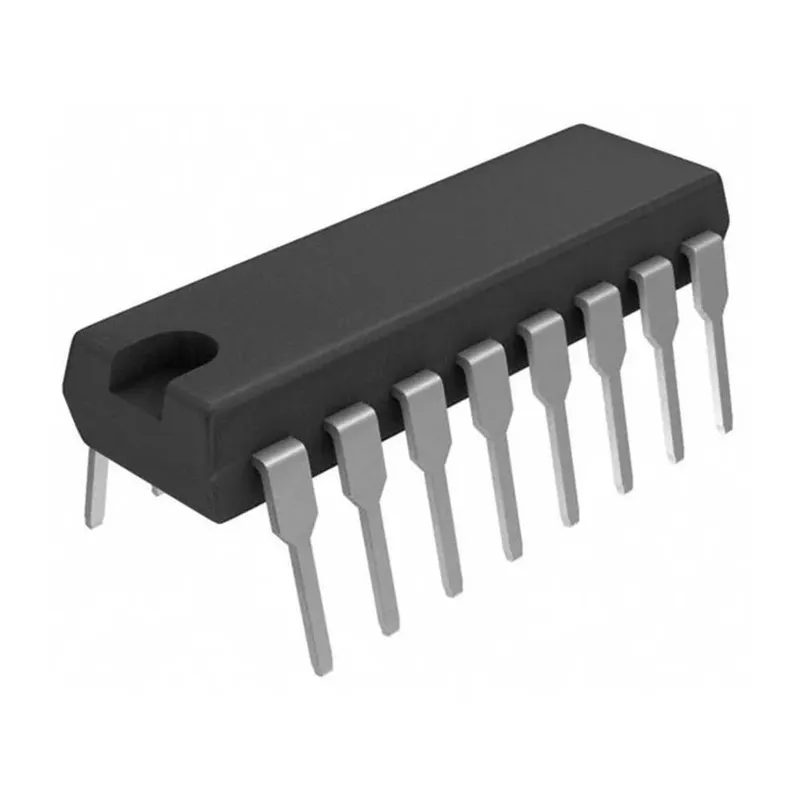
74HC147 10-to-4 Line Priority Encoder (DIP-16)
Prices updated: 13 Oct 2026
Compare prices
| Store | product | Price | View in store |
|---|---|---|---|
 Most ElectronicsCheapest Most ElectronicsCheapest | 74HC147 – 74147 ( 10-to-4 Line Priority Encoder ) | 19.9 EGP21.99 | View in store |
 Circuits Electronics Circuits Electronics | 74HC147 (10-to-4 Line Priority Encoder) | 30 EGP | View in store |
Price history
Lowest daily price, last 90 days
Not enough price history yet.
Lowest price recorded: 19.9 EGP
About this product
The 74HC147 is a high-speed CMOS 10-to-4 line priority encoder. It converts ten active-low decimal inputs into a 4-bit BCD output with active-low outputs, giving priority to the highest-numbered active input. It is used in code converters, keypad encoding and 10-position switch decoding.
Specifications
- Function
- 10-to-4 line priority encoder (BCD)
- Logic family
- 74HC (CMOS)
- Supply voltage
- 2 V to 6 V
- Operating temperature
- -40°C to +125°C
- Output current
- 5.2 mA at 6 V
- Propagation delay
- 27 ns at 6 V (25°C)
- Package
- 16-pin DIP
Frequently asked questions
What is the price of 74HC147 10-to-4 Line Priority Encoder (DIP-16) in Egypt?
74HC147 10-to-4 Line Priority Encoder (DIP-16) currently costs between 19.9 and 30 EGP across 2 offers in Egypt.
Where can I buy 74HC147 10-to-4 Line Priority Encoder (DIP-16) in Egypt?
74HC147 10-to-4 Line Priority Encoder (DIP-16) is available from Most Electronics and Circuits Electronics. Compare the offers above to find the best price.
How should I handle the active-low inputs and outputs?
Tie unused inputs to VCC (HIGH). Pull the input you want to encode LOW, for example through a switch to GND. The outputs are inverted BCD, so invert them in software or with an inverter if your logic needs active-high values.
Can it run from a 5 V supply such as an Arduino board?
Yes. The 74HC family accepts 2 V to 6 V, so a 5 V supply is suitable. On the DIP-16 package, pin 16 is VCC and pin 8 is GND. Adding a 100 nF decoupling capacitor close to the chip is good practice.