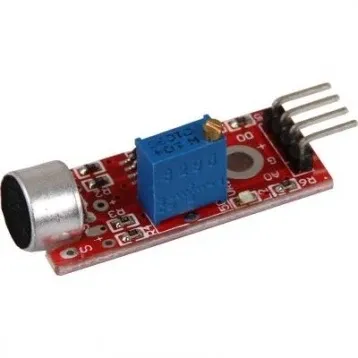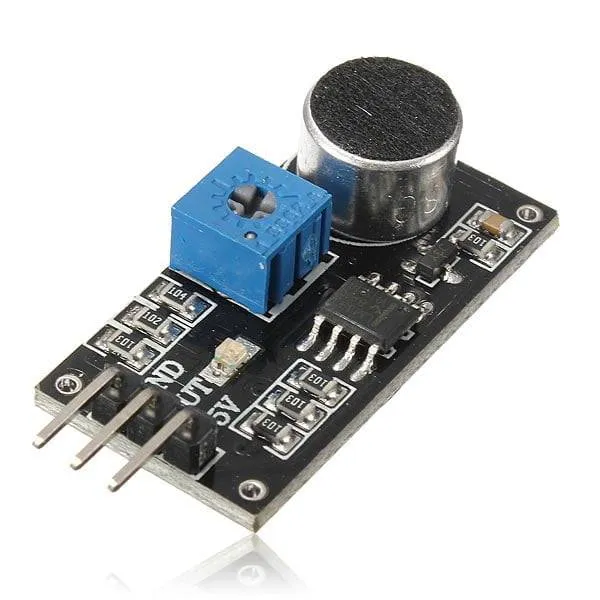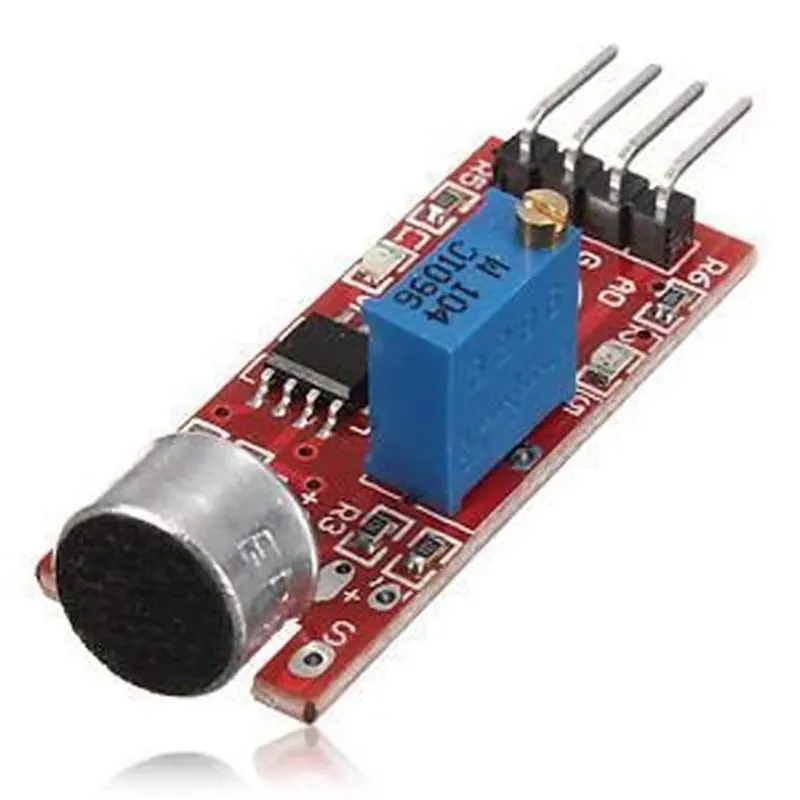
Sound Detection Sensor Module LM393 for Arduino (4-Pin, Red)
Prices updated: 13 Oct 2026
Compare prices
| Store | product | Price | View in store |
|---|---|---|---|
 Makers ElectronicsCheapest Makers ElectronicsCheapest | Microphone Sound Detection Sensor Module 4 PIN | 35 EGP | View in store |
 Microohm Microohm | Sound Detection Module Sensor for Intelligent Vehicle Compatible With Arduino 4pin (Red) | 35 EGP45 | View in store |
 Most Electronics Most Electronics | Microphone Sound Detection Sensor 4Pin | 37.9 EGP43.07 | View in store |
 ElectroHub ElectroHub | Sound Detection Sensor Module 4-Pin | 40 EGP50 | View in store |
 Ekostra Ekostra | Sound Detection Module Sensor for Intelligent Vehicle Compatible With Arduino | 50 EGP | View in store |
Price history
Lowest daily price, last 90 days
Lowest price recorded: 35 EGP
About this product
A sound detection module built around an LM393 comparator and an electret condenser microphone. It gives a digital output when a sound is detected, suiting clap switches, noise alarms and simple sound-triggered projects with Arduino. The single-channel output is active low, and an indicator LED shows the signal state.
Specifications
- Main chip
- LM393
- Microphone
- Electret condenser
- Working voltage
- DC 3.3V - 5V
- Detection distance
- 0.5 m
- Output
- Single channel, digital, active low
- Pins
- 4
Frequently asked questions
What is the price of Sound Detection Sensor Module LM393 for Arduino (4-Pin, Red) in Egypt?
Sound Detection Sensor Module LM393 for Arduino (4-Pin, Red) currently costs between 35 and 50 EGP across 5 offers in Egypt.
Where can I buy Sound Detection Sensor Module LM393 for Arduino (4-Pin, Red) in Egypt?
Sound Detection Sensor Module LM393 for Arduino (4-Pin, Red) is available from Makers Electronics, Microohm, Most Electronics, ElectroHub, and Ekostra. Compare the offers above to find the best price.
Can I connect it directly to an Arduino?
Yes. Power the module at 3.3V to 5V DC, connect GND and VCC, and wire the digital output to a digital input pin. The output goes low when sound is detected.
Does the output show how loud the sound is?
No. The output is a single digital signal, so it indicates whether sound was detected, not its volume level. For loudness measurement you would need an analog sound sensor.