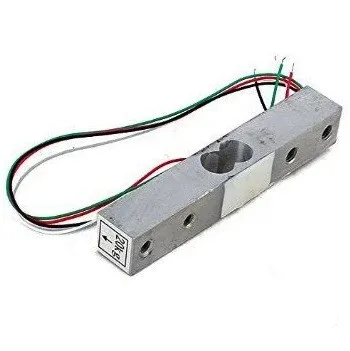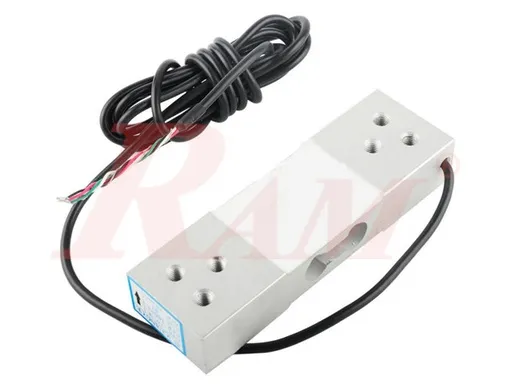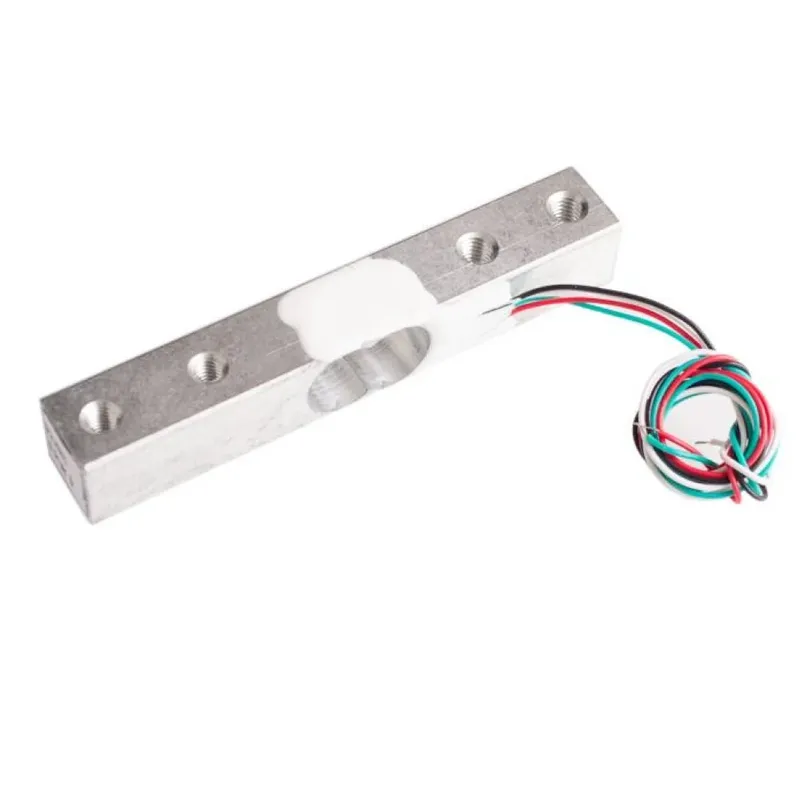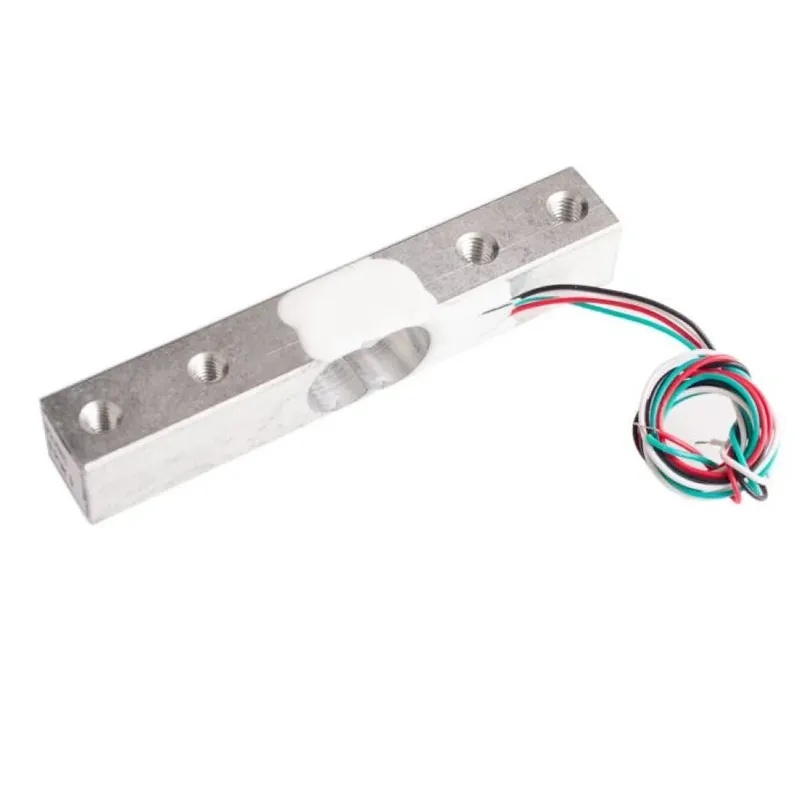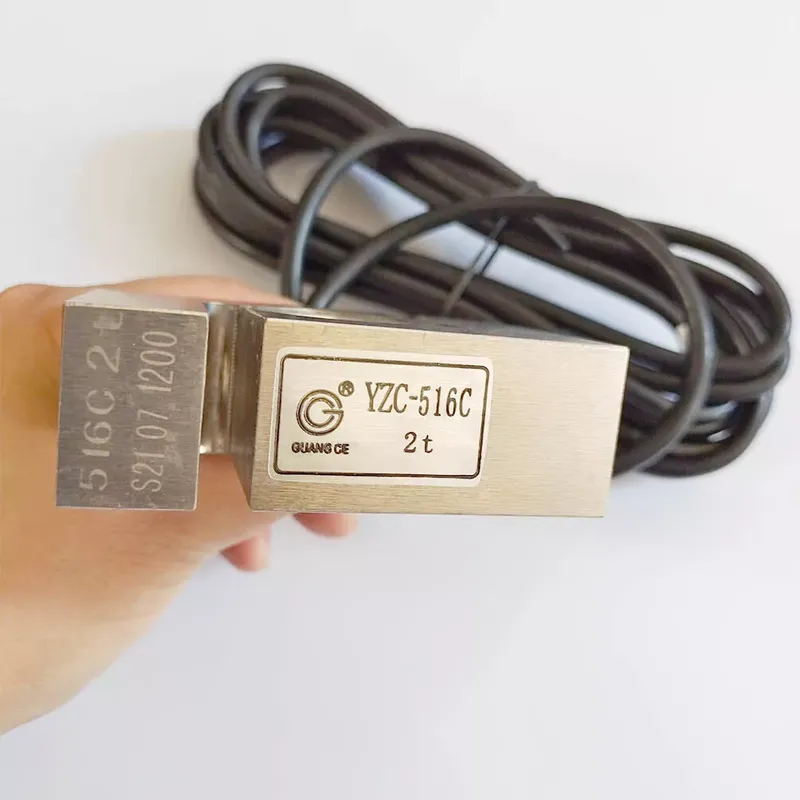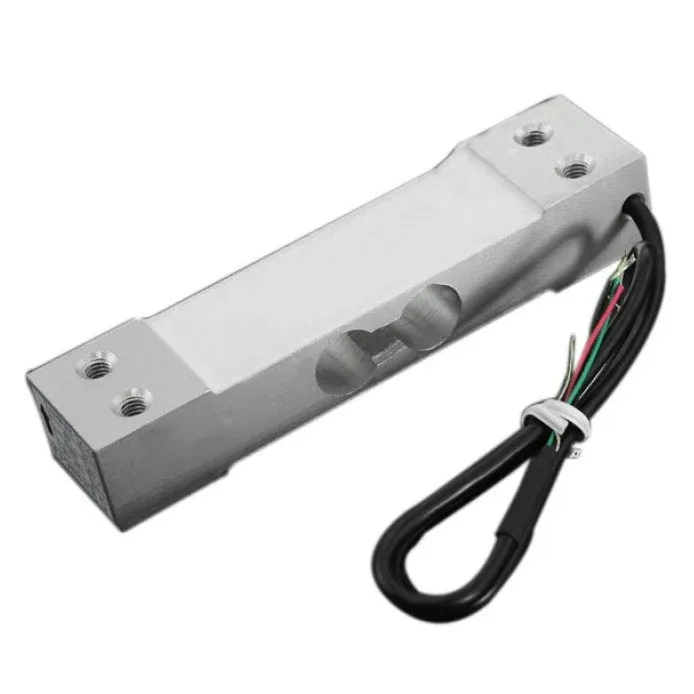
5 kg Load Cell Weight Sensor (Wired Strain Gauge)
Prices updated: 13 Oct 2026
Compare prices
| Store | product | Price | View in store |
|---|---|---|---|
 Future ElectronicsCheapest Future ElectronicsCheapest | Weight Sensor (Load Cell) 5KG | 105 EGP | View in store |
 Ekostra Ekostra | Load Cell Weight Sensor 5kg | 120 EGP | View in store |
 Circuits Electronics Circuits Electronics | Load Cell 5Kg | 120 EGP | View in store |
 Most Electronics Most Electronics | Load Cell 5kg Straight Bar Weight Sensor | 122 EGP139 | View in store |
Price history
Lowest daily price, last 90 days
Lowest price recorded: 105 EGP
About this product
This 0 to 5 kg aluminum strain-gauge load cell converts applied weight into a small differential voltage, rated at 1.0 mV/V ±10%. It is intended for electronic scales, balances and force measurement in control systems. A signal amplifier such as the HX711 is needed to read it with a microcontroller.
Specifications
- Rated load
- 0 to 5 kg
- Rated output
- 1.0 mV/V ±10%
- Non-linearity
- 0.02% F.S.
- Hysteresis
- 0.02% F.S.
- Input impedance
- 410 ±30 Ω
- Output impedance
- 350 ±3 Ω
- Operating temperature
- -20 °C to 60 °C
Frequently asked questions
What is the price of 5 kg Load Cell Weight Sensor (Wired Strain Gauge) in Egypt?
5 kg Load Cell Weight Sensor (Wired Strain Gauge) currently costs between 105 and 122 EGP across 4 offers in Egypt.
Where can I buy 5 kg Load Cell Weight Sensor (Wired Strain Gauge) in Egypt?
5 kg Load Cell Weight Sensor (Wired Strain Gauge) is available from Future Electronics, Ekostra, Circuits Electronics, and Most Electronics. Compare the offers above to find the best price.
How do I read this load cell with an Arduino?
Use an HX711 24-bit amplifier module. Connect the load cell's excitation and signal wires to the HX711 bridge inputs, then connect the HX711 DT and SCK pins to two digital pins on the Arduino.
How can I identify the wires if the colors are unknown?
Colors vary by manufacturer. With a multimeter, measure the resistance between the two excitation wires, which should be about 410 Ω, and between the two signal wires, which should be about 350 Ω.