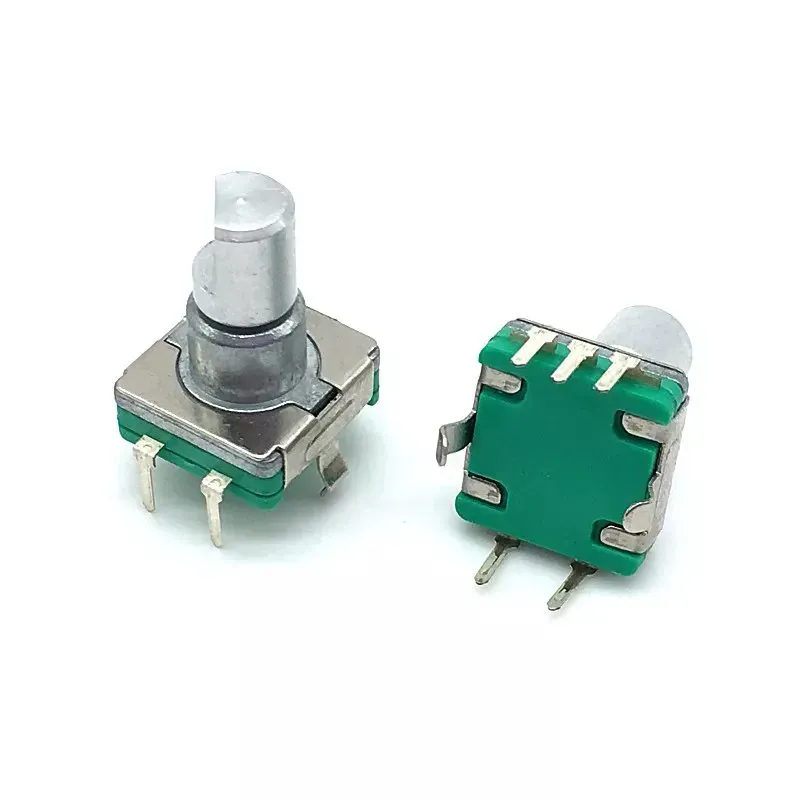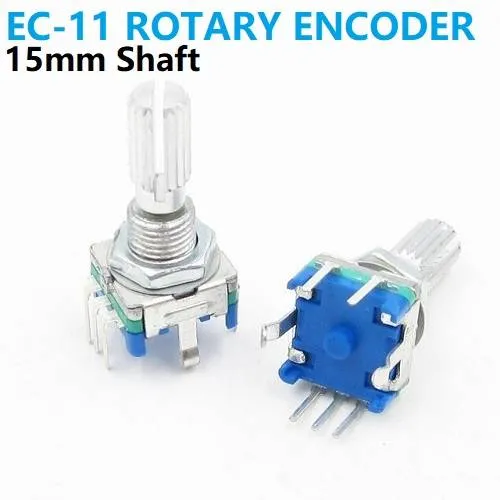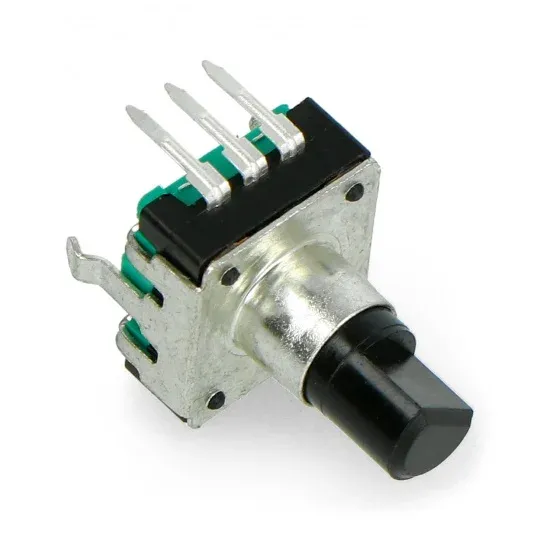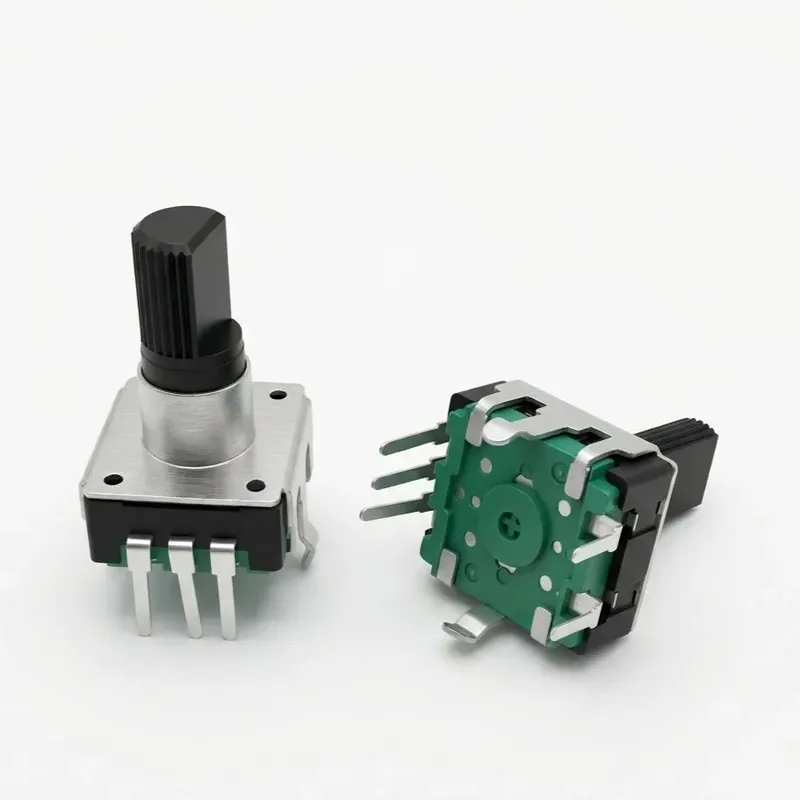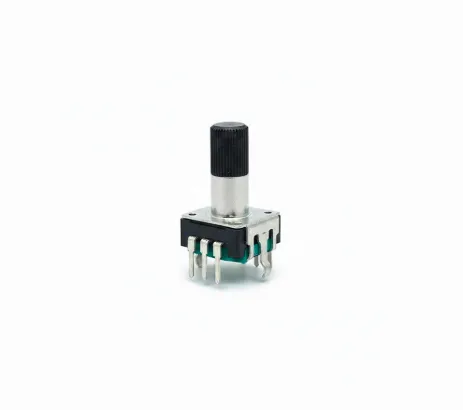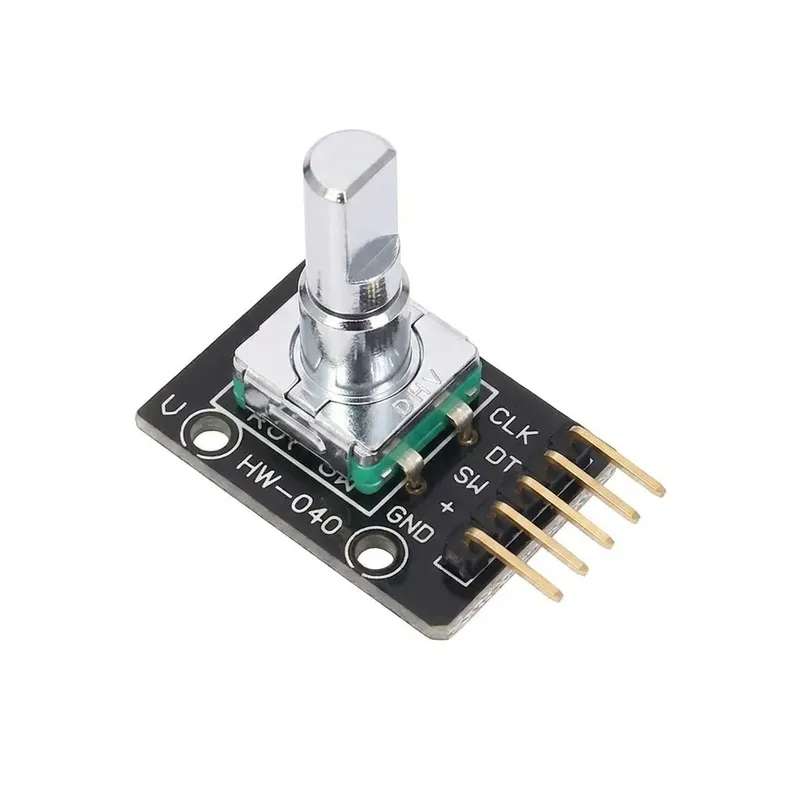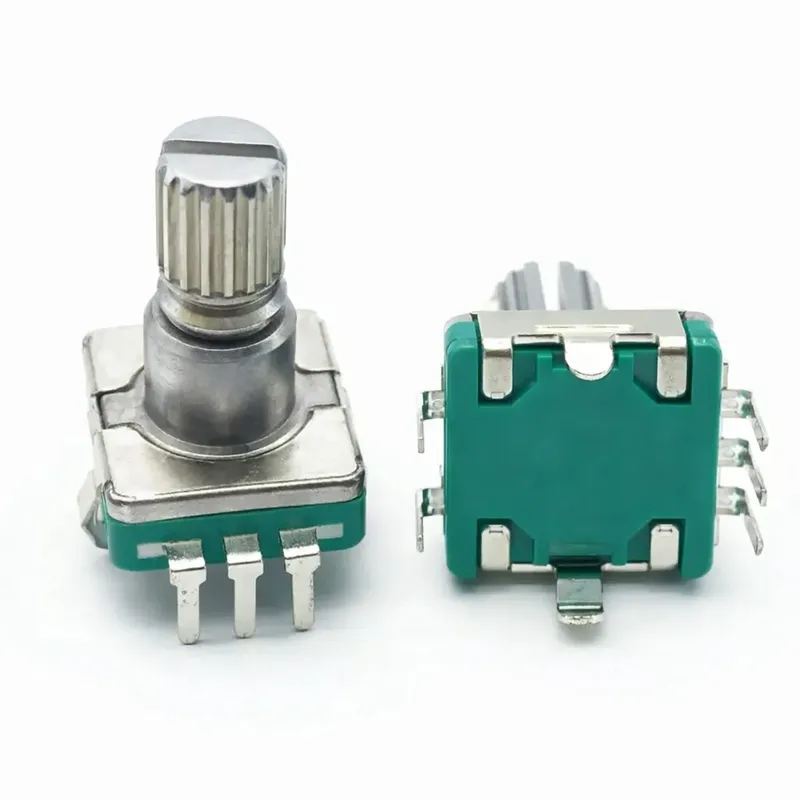
EC11 Rotary Encoder with Push Button, 5-Pin
Prices updated: 12 Oct 2026
Compare prices
| Store | product | Price | View in store |
|---|---|---|---|
 Makers ElectronicsCheapest Makers ElectronicsCheapest | EC11 Rotary Encoder With Push Button Switch 5pin 13mm | 24 EGP | View in store |
 RAM Electronics RAM Electronics | EC11 Rotary Encoder With Push Button Switch 5pin 20mm Silver | 25 EGP | View in store |
 UGE UGE | EC-11 Rotary Encoder Switch module | 57 EGP | View in store |
Price history
Lowest daily price, last 90 days
Not enough price history yet.
Lowest price recorded: 24 EGP
About this product
The EC11 is a mechanical rotary encoder with a built-in momentary push button, used to set values, select menu items and adjust volume or brightness in electronics projects. It turns endlessly through 360 degrees with 20 detent positions and produces 20 pulses per revolution. It is a common input device for Arduino, ESP32 and other microcontroller user interfaces.
Specifications
- Rotation
- 360° endless rotation
- Detent positions
- 20
- Pulses per revolution
- 20
- Push button
- Momentary
- Switch rating
- 10 mA @ 5 VDC
- Service life
- 30,000 cycles
- Number of pins
- 5
Frequently asked questions
What is the price of EC11 Rotary Encoder with Push Button, 5-Pin in Egypt?
EC11 Rotary Encoder with Push Button, 5-Pin currently costs between 24 and 57 EGP across 3 offers in Egypt.
Where can I buy EC11 Rotary Encoder with Push Button, 5-Pin in Egypt?
EC11 Rotary Encoder with Push Button, 5-Pin is available from Makers Electronics, RAM Electronics, and UGE. Compare the offers above to find the best price.
Which pins are the rotary outputs and which are the button?
The three rotary pins are A, B and the common (C) pin. The other two pins are the push button switch. Read A and B with pull-up inputs to determine rotation direction, and use software debouncing for reliable counts.
Can I use the EC11 with an Arduino or ESP32 without extra parts?
Yes. Connect the common pin to GND, the A and B pins to digital inputs, and the button pins to another digital input. Enable the internal pull-up resistors in code, since the board's pull-ups are often not needed for this wiring.