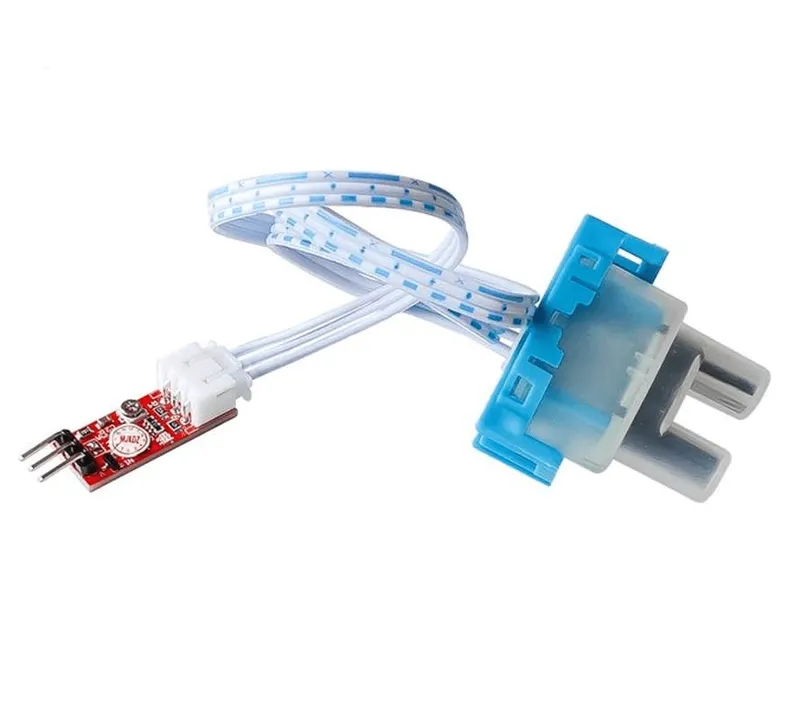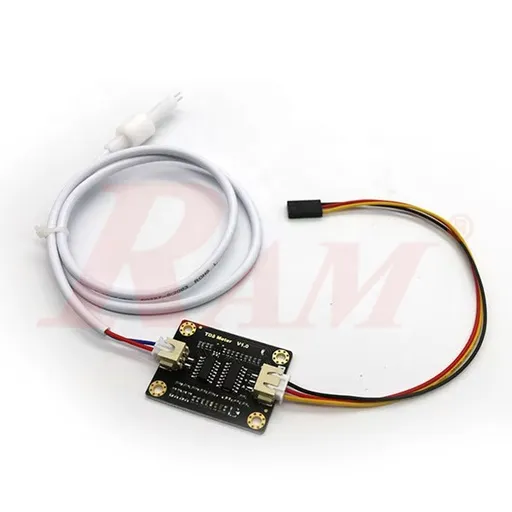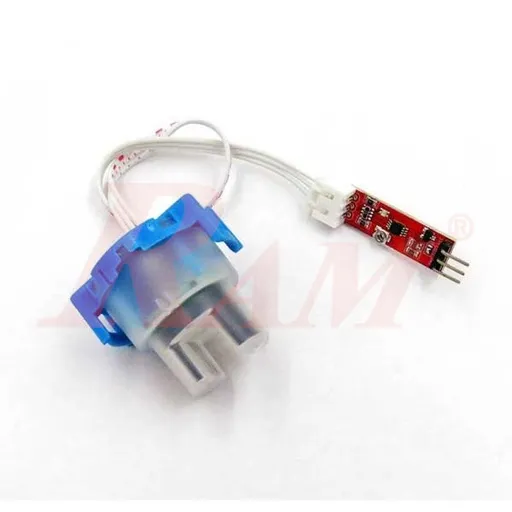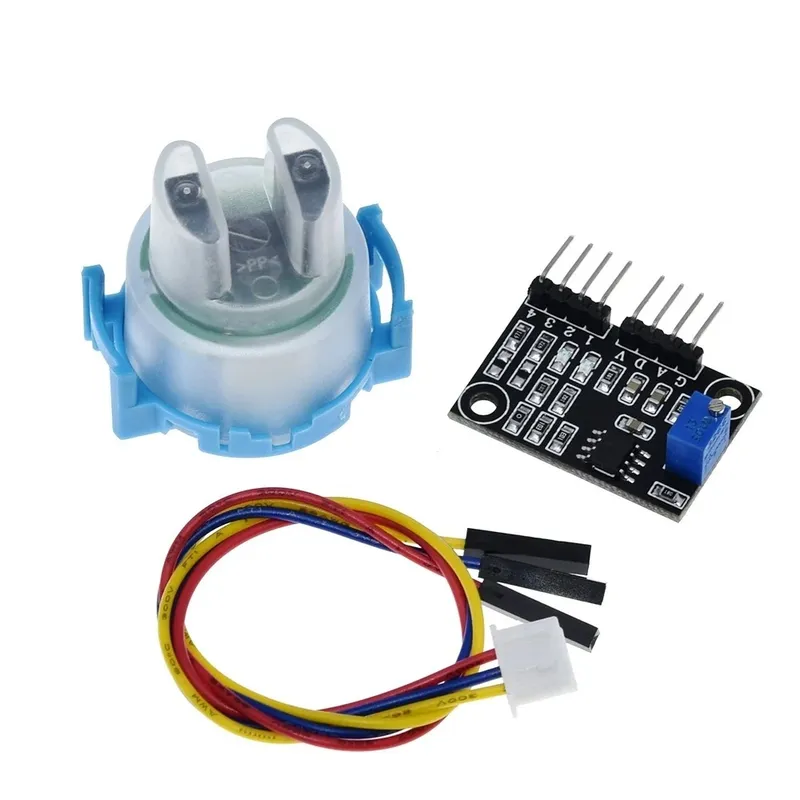
Turbidity Sensor Module, Analog Output (0-1000 NTU, 5V)
Prices updated: 14 Oct 2026
Compare prices
| Store | product | Price | View in store |
|---|---|---|---|
 EkostraCheapest EkostraCheapest | Turbidity Sensor Module Analog Output for Liquid Suspended Particles Detection | 725 EGP | View in store |
 Circuits Electronics Circuits Electronics | Turbidity Sensor (Water Suspended Particles) | 850 EGP | View in store |
Price history
Lowest daily price, last 90 days
Lowest price recorded: 725 EGP
About this product
A turbidity sensor module that estimates water cloudiness from the light transmitted through a liquid, using an infrared LED and a phototransistor. It provides an analog output voltage that changes with the suspended particle level, with a detection range of 0 to 1000 NTU. It is used in water quality monitoring and filtration projects.
Specifications
- Interface
- Analog output
- Sensor Type
- Infrared LED and phototransistor
- Detection Range
- 0–1000 NTU
- Operating Voltage
- 5 V DC
- Response Time
- < 500 ms
- Compatibility
- Arduino, ESP32, Raspberry Pi (with ADC)
Frequently asked questions
What is the price of Turbidity Sensor Module, Analog Output (0-1000 NTU, 5V) in Egypt?
Turbidity Sensor Module, Analog Output (0-1000 NTU, 5V) currently costs between 725 and 850 EGP across 2 offers in Egypt.
Where can I buy Turbidity Sensor Module, Analog Output (0-1000 NTU, 5V) in Egypt?
Turbidity Sensor Module, Analog Output (0-1000 NTU, 5V) is available from Ekostra and Circuits Electronics. Compare the offers above to find the best price.
Can I connect the analog output directly to an ESP32?
Be careful. The module runs on 5 V and its output can reach close to 5 V, while the ESP32 ADC pins accept a maximum of about 3.3 V. Use a voltage divider or level shifting on the output before connecting it to an ESP32 ADC pin.
Does the Raspberry Pi read this sensor directly?
No. The Raspberry Pi has no analog inputs, so the analog output needs an external ADC such as an MCP3008 or ADS1115 connected over SPI or I2C. Arduino reads the output on its built-in analog pins.