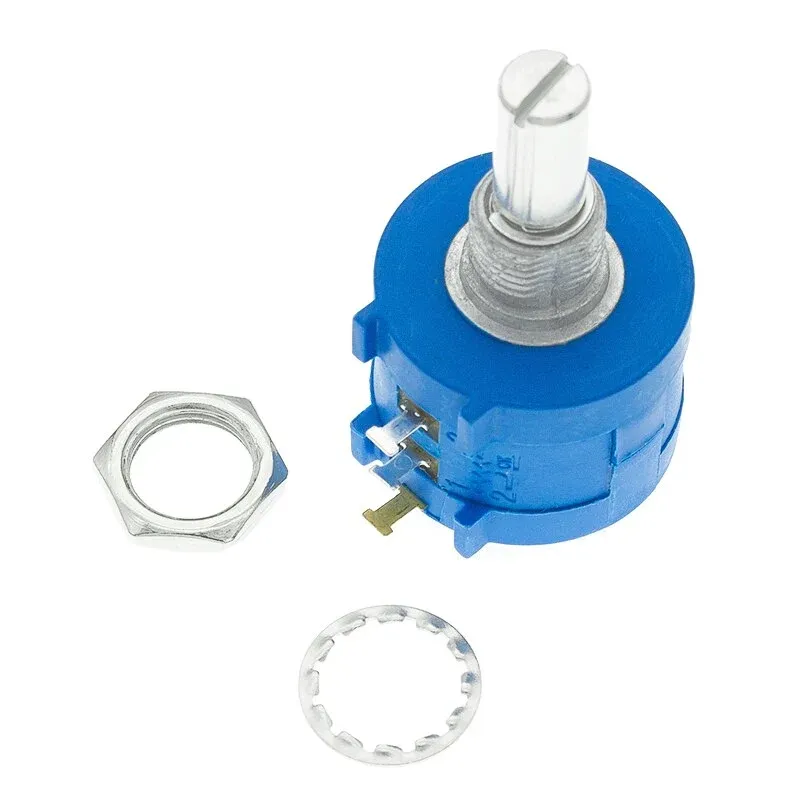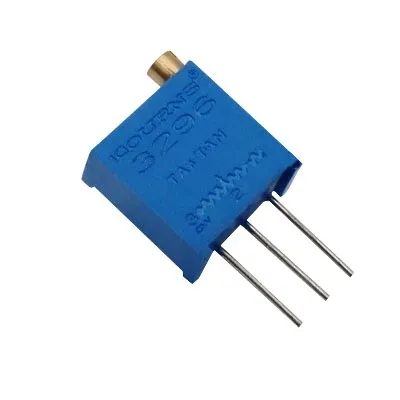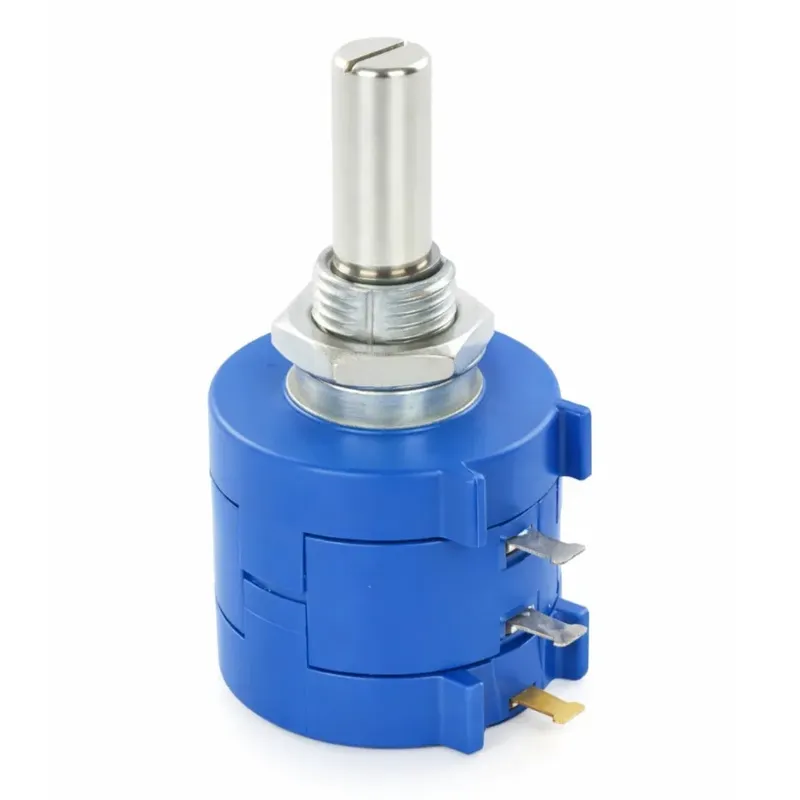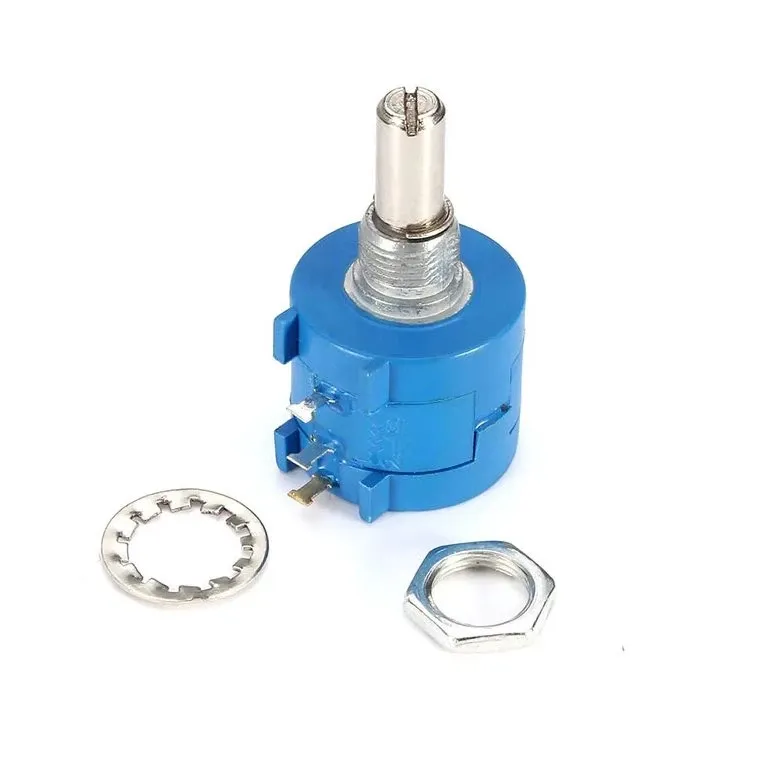
Multi-Turn Precision Potentiometer 5 kΩ (10 Turns, 22 mm)
Prices updated: 13 Oct 2026
Compare prices
| Store | product | Price | View in store |
|---|---|---|---|
 Future ElectronicsCheapest Future ElectronicsCheapest | Multi-Turn Precision Potentiometer (10 Turns-5000 OHM) | 130 EGP | View in store |
 Circuits Electronics Circuits Electronics | Precision Potentiometer (10 Turns -5 Kohm) Made in Mexico | 140 EGP | View in store |
Price history
Lowest daily price, last 90 days
Lowest price recorded: 130 EGP
About this product
A 5 kΩ precision multi-turn potentiometer with 10 turns of travel and a 22 mm body, for fine manual adjustment in analog circuits, sensor calibration and instrument tuning. The 10-turn mechanism lets you set the resistance very accurately, which makes small adjustments easier and more repeatable.
Specifications
- Resistance
- 5 kΩ (5000 Ω)
- Number of turns
- 10
- Resistance tolerance
- ±5%
- Independent linearity
- 0.25%
- Electrical travel
- 3600° ±10°
- Rated power
- 2 W
- Rated voltage
- 450 V AC
- Mechanical endurance
- 10000 cycles (دورة)
Frequently asked questions
What is the price of Multi-Turn Precision Potentiometer 5 kΩ (10 Turns, 22 mm) in Egypt?
Multi-Turn Precision Potentiometer 5 kΩ (10 Turns, 22 mm) currently costs between 130 and 140 EGP across 2 offers in Egypt.
Where can I buy Multi-Turn Precision Potentiometer 5 kΩ (10 Turns, 22 mm) in Egypt?
Multi-Turn Precision Potentiometer 5 kΩ (10 Turns, 22 mm) is available from Future Electronics and Circuits Electronics. Compare the offers above to find the best price.
How do I wire a multi-turn potentiometer?
Connect the two outer terminals across the reference voltage (for example 5 V and GND) and take the middle pin, the wiper, as the adjustable output to an ADC input or circuit node. If you are unsure which pin is the wiper, check it with a multimeter.
Why choose a multi-turn type over a single-turn one?
Ten turns give much finer resolution than a single-turn potentiometer, so small changes in resistance are easier to set and repeat. This is useful for calibration and for setting precise reference points.