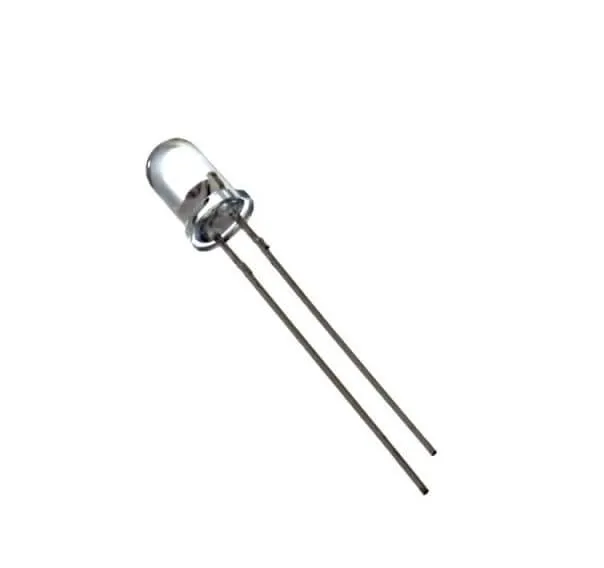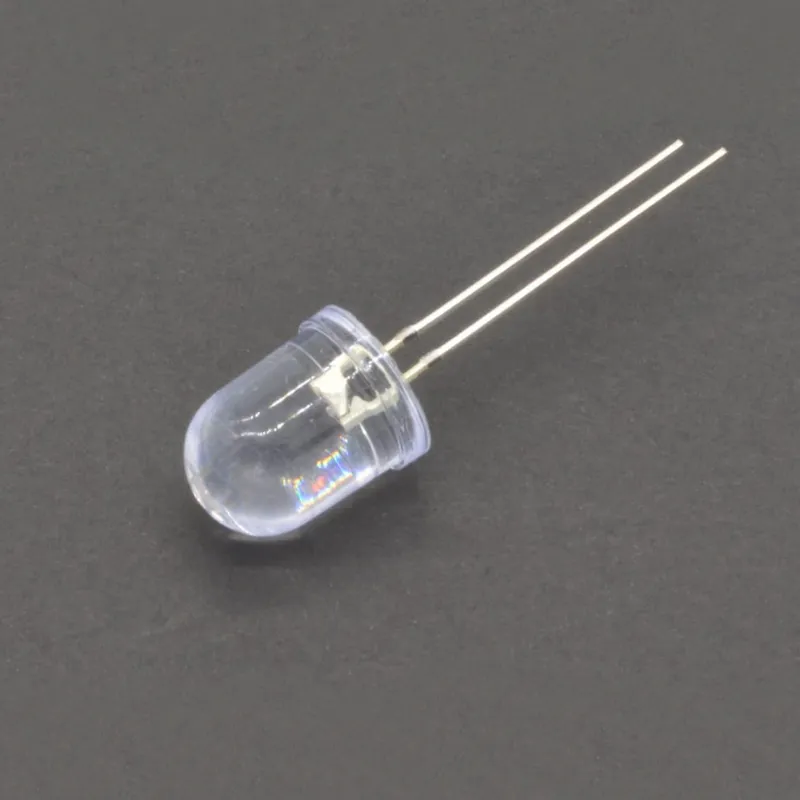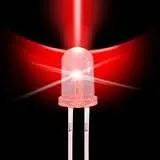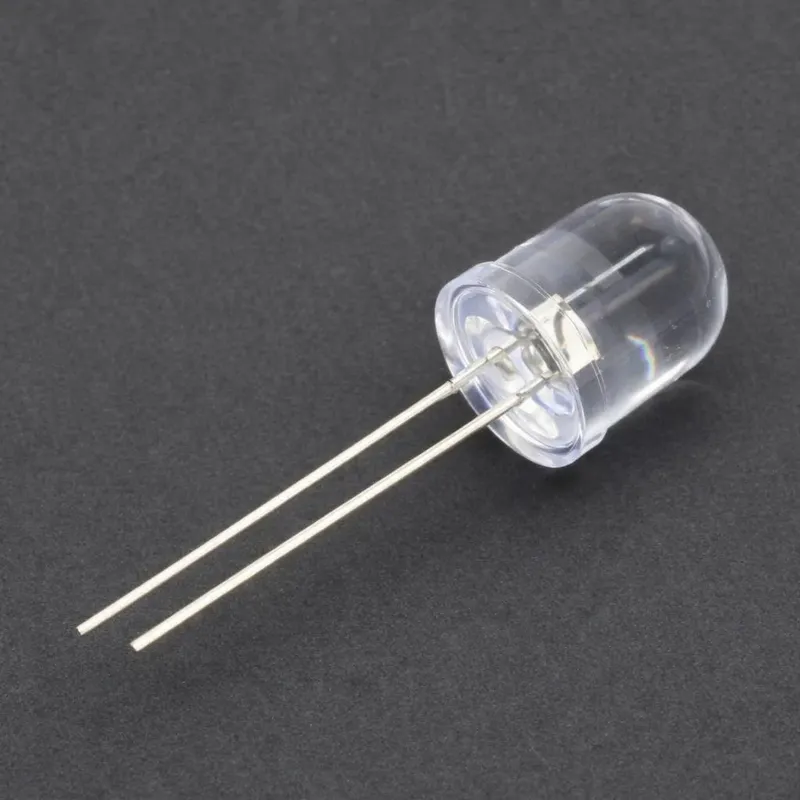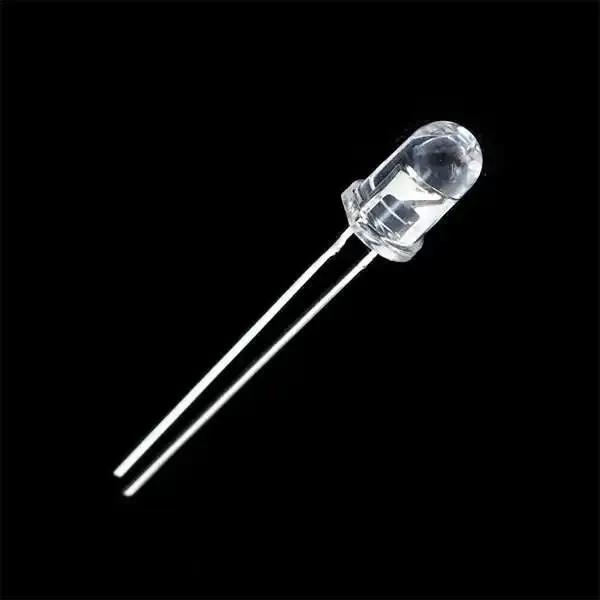
Infrared IR LED 5mm 940nm Clear Lens (Transmitter)
Prices updated: 13 Oct 2026
Compare prices
| Store | product | Price | View in store |
|---|---|---|---|
 Makers ElectronicsCheapest Makers ElectronicsCheapest | IR LED Emitter 5mm | 2 EGP | View in store |
 Microohm Microohm | Infrared LED Diode Transmitter 5mm – 940nm IR Emitter – Clear Lens | 2 EGP3.5 | View in store |
 Most Electronics Most Electronics | Infrared LED Diode (Transmitter) | 2.75 EGP3.07 | View in store |
 Future Electronics Future Electronics | Infrared LED Diode (Transmitter) | 3 EGP | View in store |
 UGE UGE | LED Infrared Transmitter Clear 5mm | 3.5 EGP | View in store |
 Circuits Electronics Circuits Electronics | Infrared LED (Transmitter) | 5 EGP | View in store |
Price history
Lowest daily price, last 90 days
Lowest price recorded: 2 EGP
About this product
This 5 mm infrared LED emits light at about 940 nm and is used as a transmitter in remote controls, IR beam sensors and obstacle detection circuits. It has a clear lens and a 60 degree viewing angle. Its light is invisible to the eye but appears in many phone and digital cameras.
Specifications
- Emitter type
- Infrared (IR)
- Package
- 5 mm round
- Wavelength
- 940 nm
- Lens
- Clear
- Viewing angle
- 60°
Frequently asked questions
What is the price of Infrared IR LED 5mm 940nm Clear Lens (Transmitter) in Egypt?
Infrared IR LED 5mm 940nm Clear Lens (Transmitter) currently costs between 2 and 5 EGP across 6 offers in Egypt.
Where can I buy Infrared IR LED 5mm 940nm Clear Lens (Transmitter) in Egypt?
Infrared IR LED 5mm 940nm Clear Lens (Transmitter) is available from Makers Electronics, Microohm, Most Electronics, Future Electronics, UGE, and Circuits Electronics. Compare the offers above to find the best price.
Do I need a current-limiting resistor with this IR LED?
Yes. Like any LED, it needs a series resistor sized from your supply voltage, its forward voltage and the target current. Never connect it directly across a supply.
Which receiver should I use with it?
Use a receiver sensitive around 940 nm, such as a TSOP-series IR receiver or a photodiode. IR remote receivers usually expect a modulated signal, often a 38 kHz carrier, so check the receiver's datasheet before pairing.