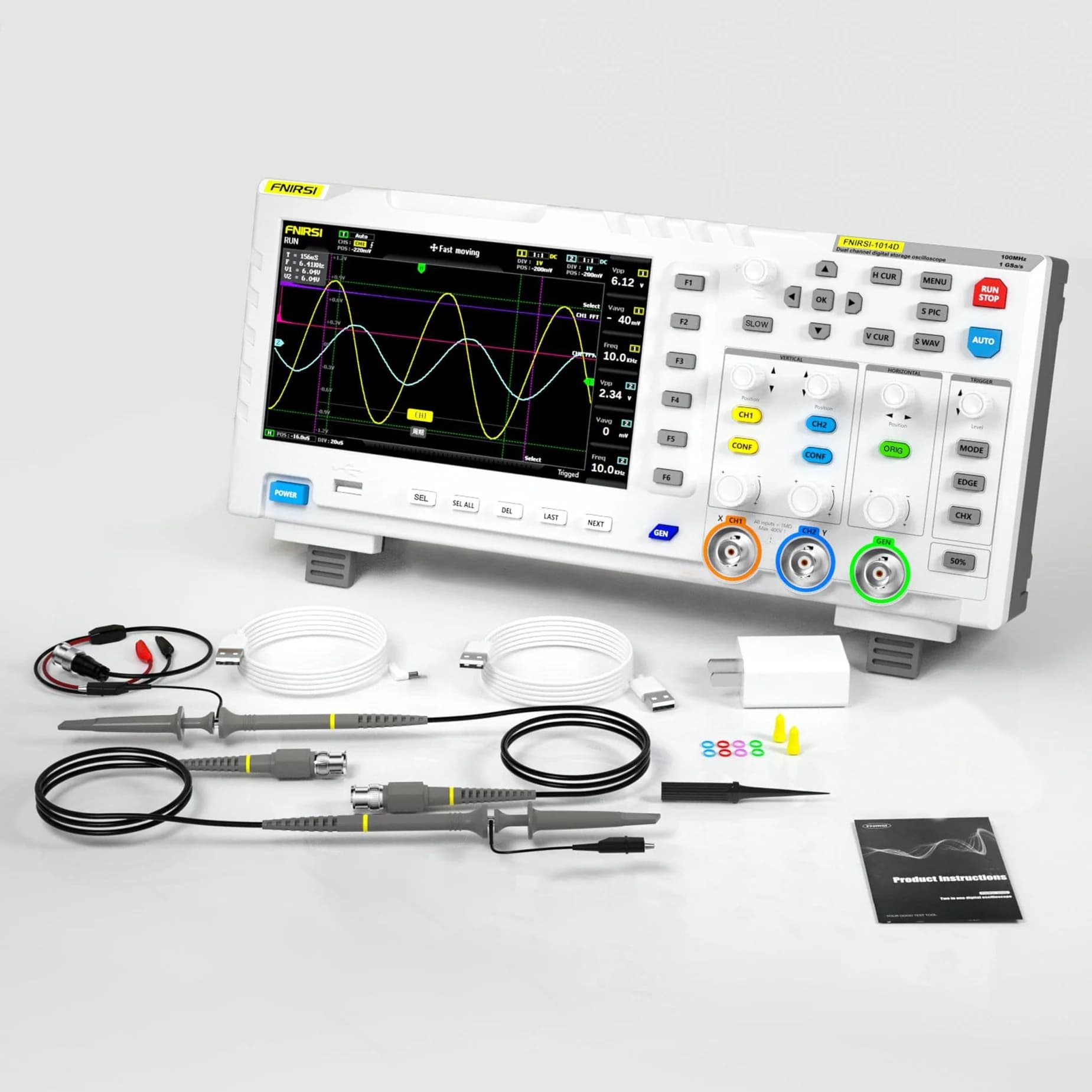
FNIRSI DPOX180H 2-in-1 Oscilloscope 180MHz with 20MHz DDS Generator
Prices updated: 12 Oct 2026
Compare prices
| Store | product | Price | View in store |
|---|---|---|---|
 Makers ElectronicsCheapest Makers ElectronicsCheapest | FNIRSI® DPOX180H 2-IN-1 Dual Channel 180MHz 500MS/S Digital Phosphor Oscilloscope Signal Generator | 11,500 EGP | View in store |
 Microohm Microohm | FNIRSI DPOX180H 2-in-1 180MHz Dual-Channel Digital Phosphor Oscilloscope + DDS Signal Generator | 12,000 EGP15,000 | View in store |
Price history
Lowest daily price, last 90 days
Not enough price history yet.
Lowest price recorded: 11,500 EGP
About this product
A portable 2-in-1 instrument combining a dual-channel 180 MHz digital phosphor oscilloscope with 500 MSa/s sampling and a built-in 20 MHz DDS signal generator. Its 2.8-inch IPS screen, FFT, digital triggering and USB data export suit debugging, teaching and hobby electronics work.
Specifications
- Model
- DPOX180H
- Channels
- 2 (dual-channel)
- Analog bandwidth
- 180 MHz
- Real-time sampling rate
- 500 MSa/s
- Vertical sensitivity
- 5 mV
- Built-in signal generator
- 20 MHz DDS
- Display
- 2.8-inch IPS
Frequently asked questions
What is the price of FNIRSI DPOX180H 2-in-1 Oscilloscope 180MHz with 20MHz DDS Generator in Egypt?
FNIRSI DPOX180H 2-in-1 Oscilloscope 180MHz with 20MHz DDS Generator currently costs between 11,500 and 12,000 EGP across 2 offers in Egypt.
Where can I buy FNIRSI DPOX180H 2-in-1 Oscilloscope 180MHz with 20MHz DDS Generator in Egypt?
FNIRSI DPOX180H 2-in-1 Oscilloscope 180MHz with 20MHz DDS Generator is available from Makers Electronics and Microohm. Compare the offers above to find the best price.
Can I measure mains voltage directly with this oscilloscope?
It is not recommended. This is a portable instrument intended for low-voltage circuits, so measuring mains directly requires proper isolation and rated probes. Use an isolated measurement setup for any mains work.
How can I use the built-in DDS signal generator with the scope?
Use the 20 MHz DDS generator to feed a test signal into a circuit, such as a filter or amplifier input, and observe the response on the oscilloscope channels. This is useful for testing filters, amplifiers and analog circuits without an external generator.