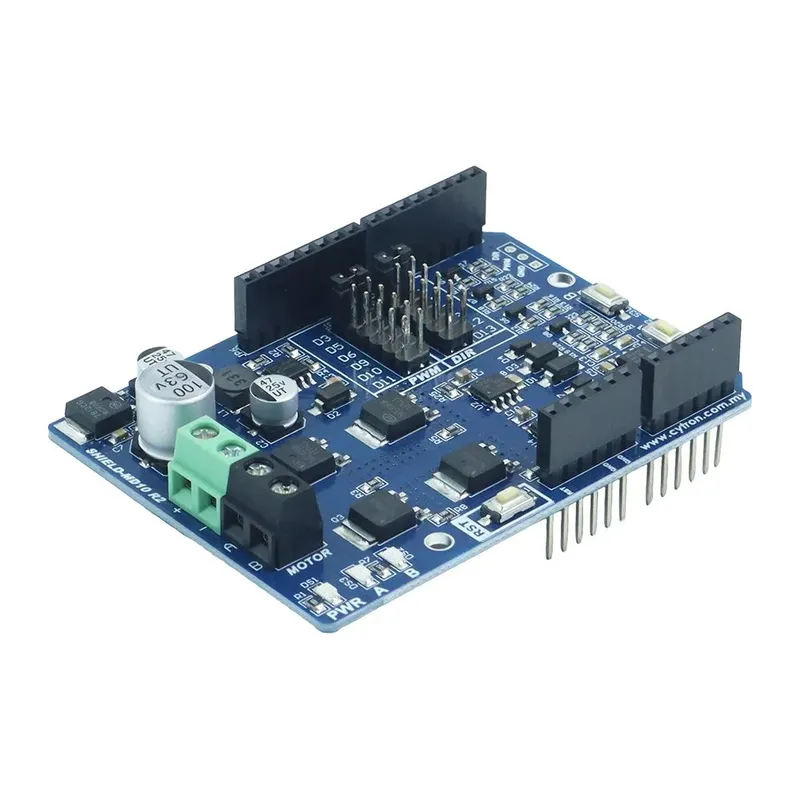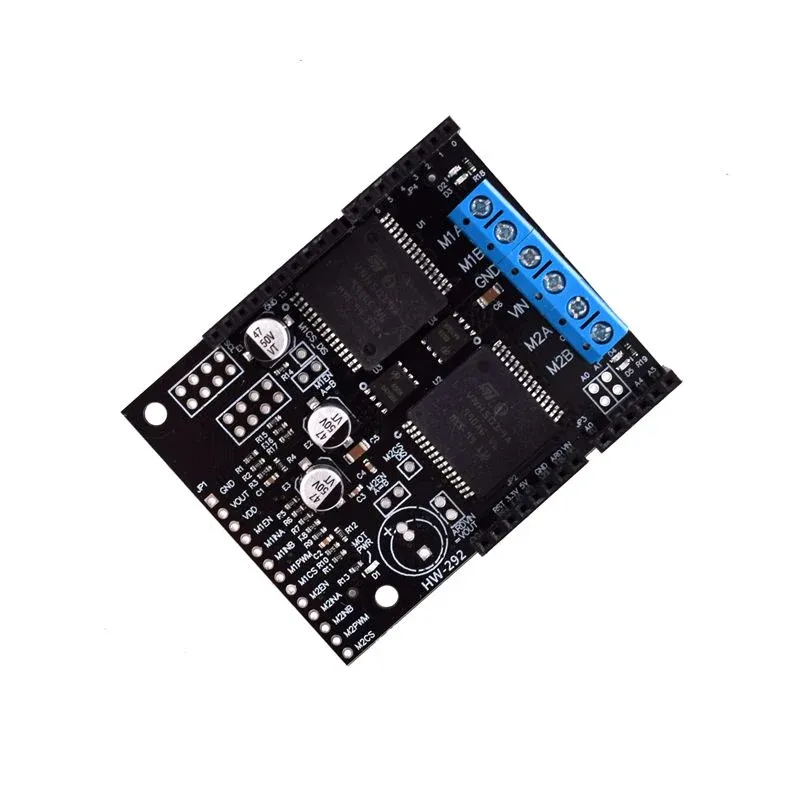
Dual VNH5019 DC Motor Driver Shield (12 A Continuous, 30 A Peak)
Prices updated: 13 Oct 2026
Compare prices
| Store | product | Price | View in store |
|---|---|---|---|
 Circuits Electronics Circuits Electronics | Dual VNH5019 DC Motor Driver (30A Peak - 12A Continuos) | 2,200 EGP | View in store |
Price history
Lowest daily price, last 90 days
Not enough price history yet.
Lowest price recorded: 2,200 EGP
About this product
A dual-channel high-power motor driver shield for Arduino UNO-compatible boards, built with VNH5019 driver ICs and surface-mount components. It operates from 5.5 to 24 V and drives two bidirectional DC motors at up to 12 A continuous (30 A peak) each. It can also drive a single motor across both channels at up to 24 A continuous.
Specifications
- Operating voltage
- 5.5 to 24 V DC
- Continuous current per motor
- 12 A
- Peak current per motor
- 30 A
- Channels
- 2 (dual)
- Single-motor mode
- 24 A continuous (60 A peak)
- Board compatibility
- Arduino UNO R3 and compatible
- Construction
- Surface-mount (SMD)
Frequently asked questions
What is the price of Dual VNH5019 DC Motor Driver Shield (12 A Continuous, 30 A Peak) in Egypt?
Dual VNH5019 DC Motor Driver Shield (12 A Continuous, 30 A Peak) currently costs 2,200 EGP in Egypt.
Where can I buy Dual VNH5019 DC Motor Driver Shield (12 A Continuous, 30 A Peak) in Egypt?
Dual VNH5019 DC Motor Driver Shield (12 A Continuous, 30 A Peak) is available from Circuits Electronics. Compare the offers above to find the best price.
Can this shield be controlled from an Arduino?
Yes. The shield is designed to be controlled from an Arduino UNO-compatible board, which sends direction and speed signals to the two channels. Refer to the shield's pin mapping for the exact pins used.
What supply voltage does the driver need?
The driver operates from 5.5 to 24 V DC. Use a separate motor power supply within this range, sized for the current your motors draw, and do not power the motors from the Arduino 5 V pin.