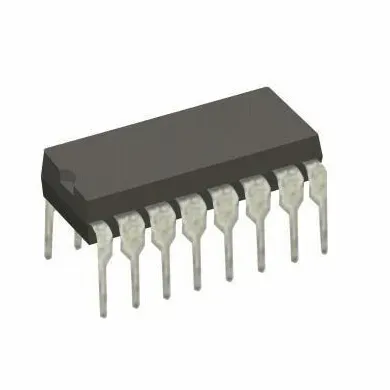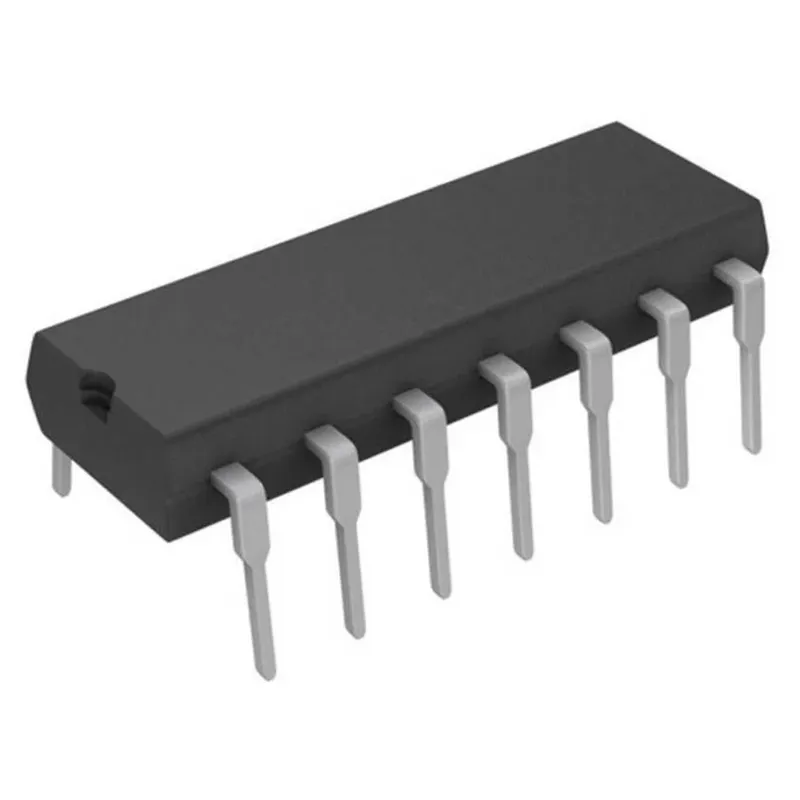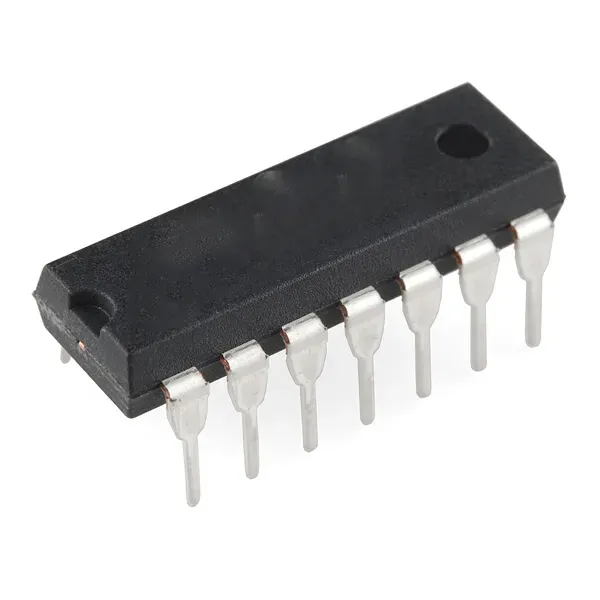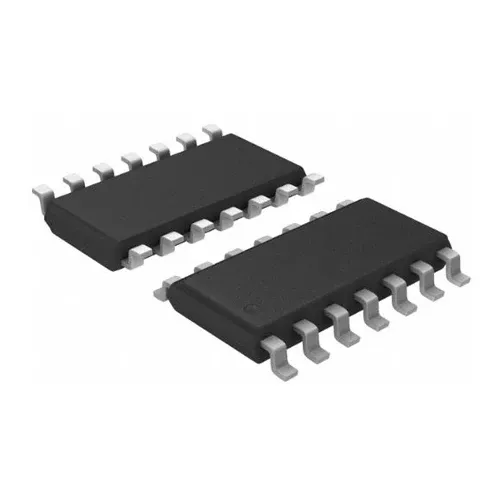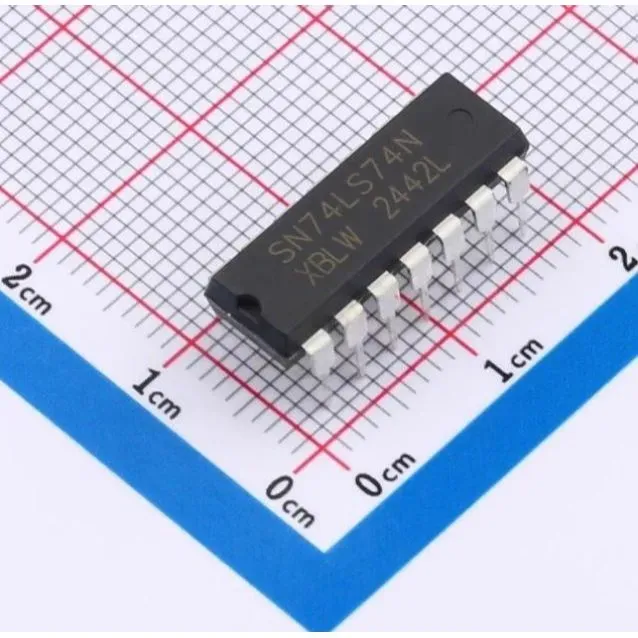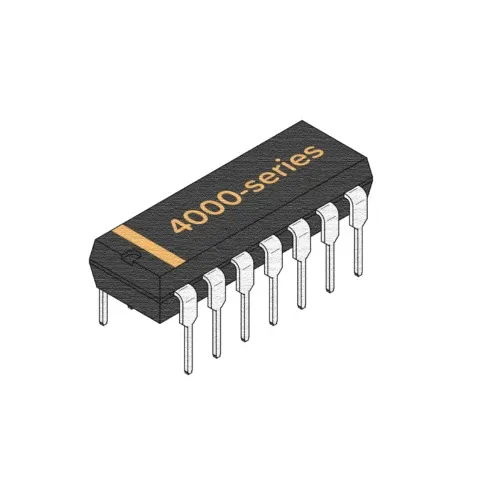
CD4027 Dual JK Flip-Flop IC with Set and Reset (DIP-16)
Prices updated: 13 Oct 2026
Compare prices
| Store | product | Price | View in store |
|---|---|---|---|
 Future ElectronicsCheapest Future ElectronicsCheapest | 4027 (Dual JK Flip-Flop) | 12 EGP | View in store |
 Makers Electronics Makers Electronics | CD4027BD Dual J-K Master-Slave Flip-Flop 20V 200µA IC DIP-16 | 17 EGP | View in store |
 RAM Electronics RAM Electronics | IC 4027 - Dual JK Master-Slave Flip Flop | 20 EGP | View in store |
 Circuits Electronics Circuits Electronics | CD4027 - Dual JK Flip Flop | 25 EGP | View in store |
Price history
Lowest daily price, last 90 days
Lowest price recorded: 12 EGP
About this product
CD4027 is a CMOS dual JK flip-flop in a 16-pin DIP package, with two independent flip-flops that each store one bit. It is used in shift registers, control and storage registers, counters and small memory circuits, and is one of the most flexible flip-flop types for logic design.
Specifications
- Number of flip-flops
- 2
- Flip-flop type
- JK with set and reset
- Logic family
- CMOS
- Package
- DIP-16
Frequently asked questions
What is the price of CD4027 Dual JK Flip-Flop IC with Set and Reset (DIP-16) in Egypt?
CD4027 Dual JK Flip-Flop IC with Set and Reset (DIP-16) currently costs between 12 and 25 EGP across 4 offers in Egypt.
Where can I buy CD4027 Dual JK Flip-Flop IC with Set and Reset (DIP-16) in Egypt?
CD4027 Dual JK Flip-Flop IC with Set and Reset (DIP-16) is available from Future Electronics, Makers Electronics, RAM Electronics, and Circuits Electronics. Compare the offers above to find the best price.
How do the Set and Reset pins work on the CD4027?
Set and Reset are asynchronous, active-high inputs. A high on Set forces Q to 1, and a high on Reset forces Q to 0, regardless of the clock. Keep both low during normal clocked operation.
What is the difference between JK and D flip-flops for beginners?
A JK flip-flop has two data inputs, J and K. J=1, K=0 sets the output high, J=0, K=1 resets it low, J=K=0 holds the state, and J=K=1 toggles it on each clock edge. This makes JK useful for counters and toggling circuits.