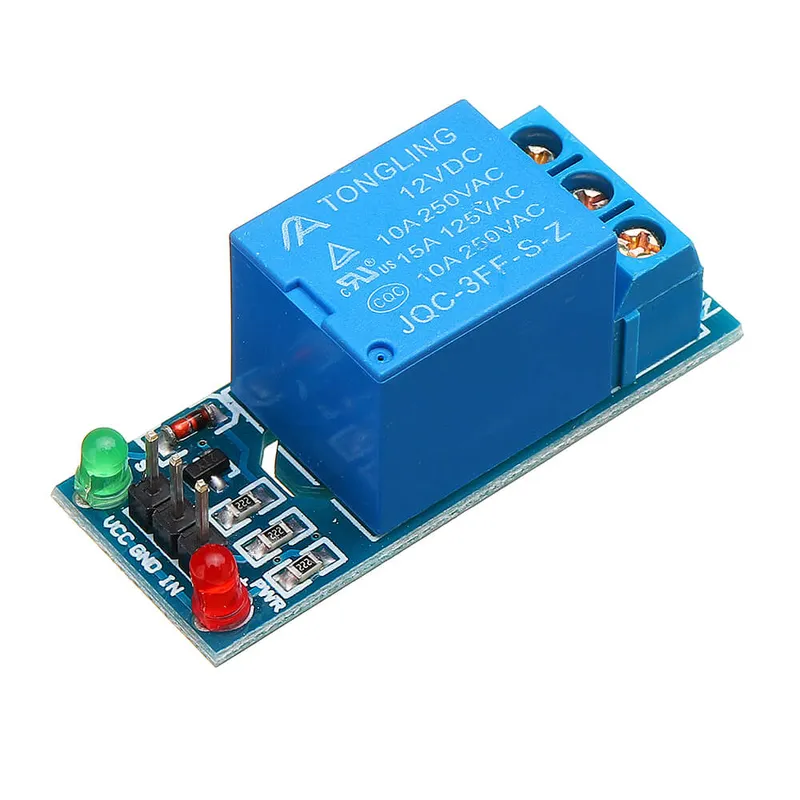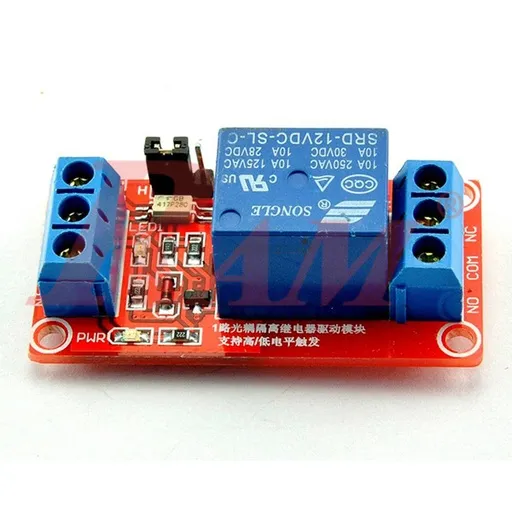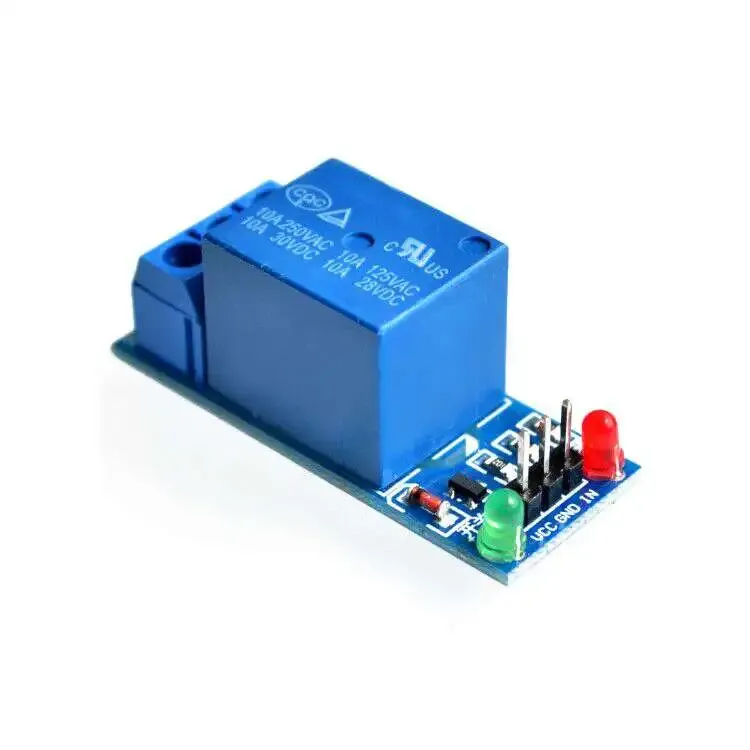
2-Channel 24V Relay Module with High/Low Level Trigger Jumper
Prices updated: 12 Oct 2026
Compare prices
| Store | product | Price | View in store |
|---|---|---|---|
 Makers Electronics Makers Electronics | Relay Module (2 Channel) 24V with High/Low Level Trigger Selector | 75 EGP | View in store |
Price history
Lowest daily price, last 90 days
Not enough price history yet.
Lowest price recorded: 75 EGP
About this product
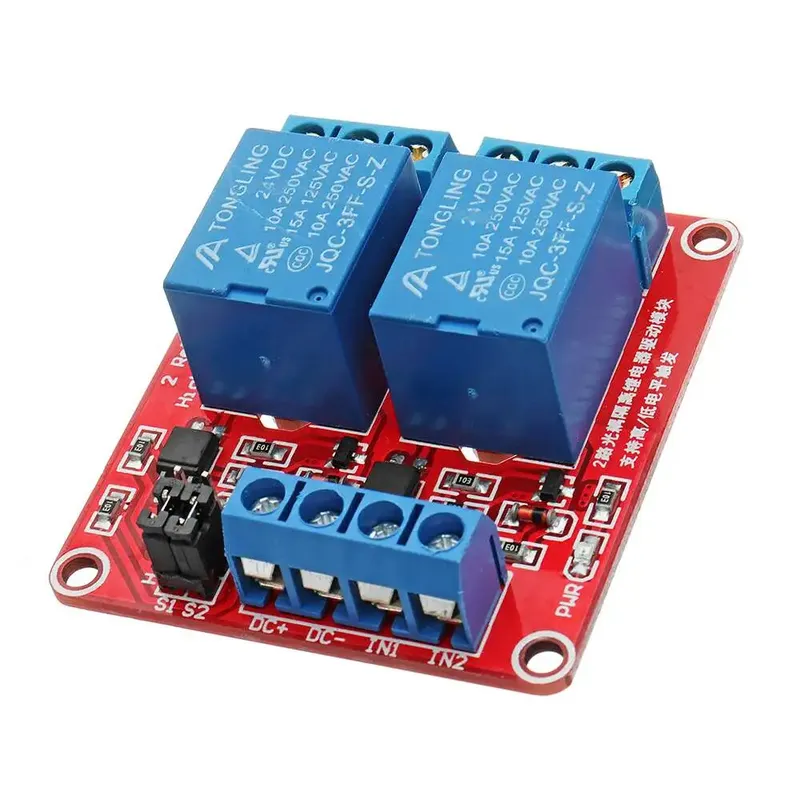
A two-channel relay board with 24 V coils, optically isolated control inputs and screw terminal connectors. A jumper selects whether the relays activate on a high or a low logic signal, so it works with microcontrollers and development boards. Each relay is rated 10 A at AC 250 V or DC 30 V, suitable for switching lamps, pumps and other loads.
Specifications
- Module Supply Voltage (VCC)
- 24 V
- Relay Coil Voltage
- 24 V
- Number of Channels
- 2
- Trigger Mode
- High or low level, selected by jumper H/L
- Maximum Load
- AC 250 V / 10 A, DC 30 V / 10 A
- Board Size
- 50 x 45 mm
- Mounting Hole Diameter
- 3 mm
- Connectors
- Screw terminal (ARK)
Frequently asked questions
What is the price of 2-Channel 24V Relay Module with High/Low Level Trigger Jumper in Egypt?
2-Channel 24V Relay Module with High/Low Level Trigger Jumper currently costs 75 EGP in Egypt.
Where can I buy 2-Channel 24V Relay Module with High/Low Level Trigger Jumper in Egypt?
2-Channel 24V Relay Module with High/Low Level Trigger Jumper is available from Makers Electronics. Compare the offers above to find the best price.
How do I choose between high-level and low-level triggering?
Set the H/L jumper to match your controller. Use the low-level setting if the relay should activate when the input is pulled low, and the high-level setting if it should activate on a high signal. Check the jumper position against your microcontroller's logic before connecting the signal.
Does the relay module need a separate 24 V supply?
Yes. The relay coils are rated for 24 V, so the module's VCC supply must be 24 V. The microcontroller only drives the optically isolated control input, and it should not power the coils directly.